
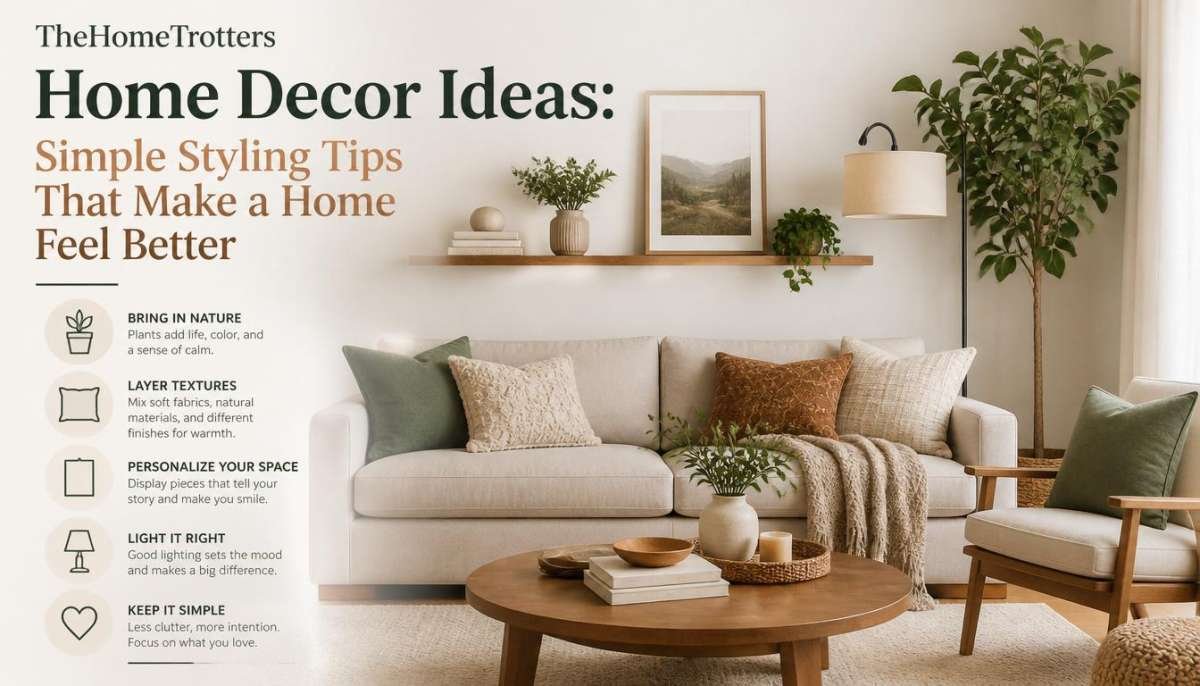
Looking for TheHomeTrotters home decor ideas? Start with the small changes that make the biggest difference a calmer color palette, warmer lighting, layered textures, and decor that feels personal instead of random. The real secret is not spending more, but styling your home in a way that feels cozy, balanced, and actually lived in.
A few thoughtful updates can make even an ordinary room feel more polished and inviting. Sometimes that means reworking your layout, sometimes it means adding softness through textiles, and sometimes it’s simply about removing clutter that’s making the space feel off.
If you want your home to look more put together without a full makeover, these ideas are exactly where to start.
What are TheHomeTrotters home decor ideas really about?
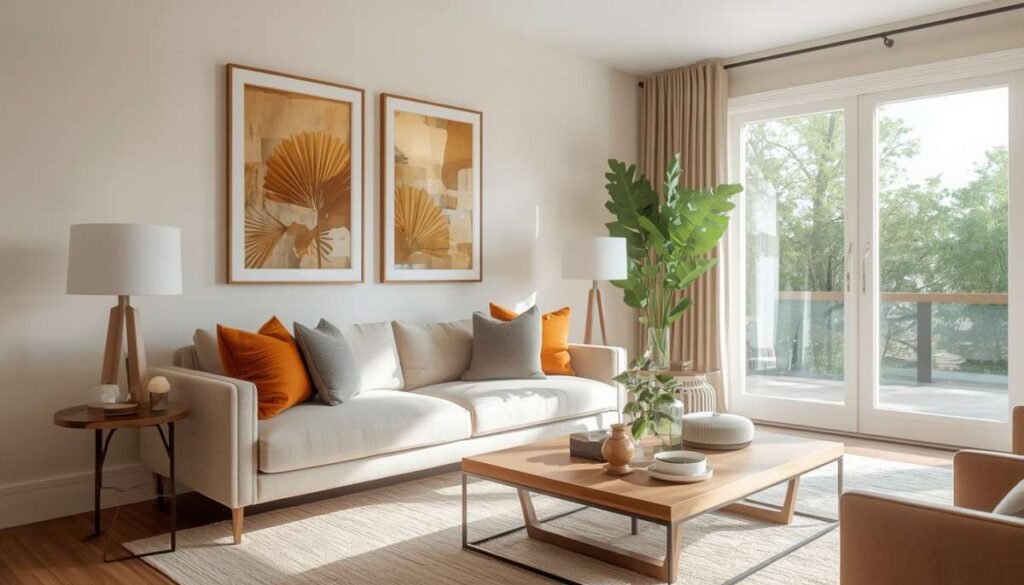
At the core, TheHomeTrotters home decor ideas are about creating a home that feels intentional without feeling overdone. It’s the kind of decorating approach that mixes style with comfort. A room should look good, but it should also feel like a place where people actually live, relax, and spend time.
A lot of the ideas tied to this style come back to a few simple principles. Start with a clear direction before buying decor. Keep the room visually balanced instead of mixing too many random styles. Add texture so the space doesn’t feel flat. Use lighting to create warmth. And most importantly, bring in pieces that make the room feel personal instead of generic.
That’s what makes this style useful. It isn’t built around one strict look. You can take it in a modern direction, a cozy layered direction, or even a more collected, travel-inspired direction. The point is not to copy one exact setup. It’s to make your own space feel more complete.
Also Read : Laundry Room Decor Ideas 2026: Stylish Ways to Transform Your…
Start with the mood of the room before you buy anything
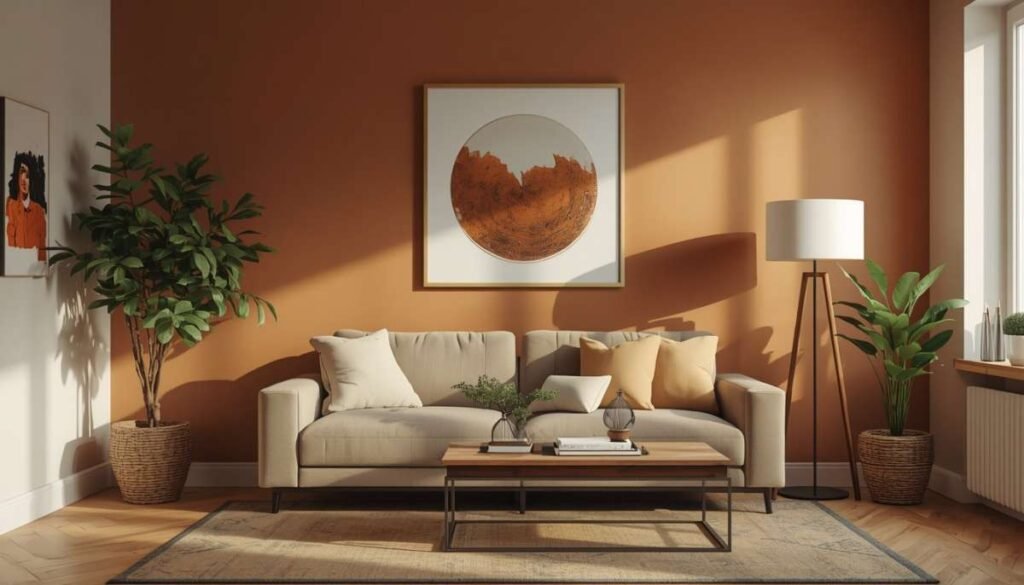
One of the biggest decorating mistakes is buying pieces one by one without knowing what kind of room you’re trying to create. That’s usually how a space ends up feeling disconnected. The lamp looked good online, the rug looked good online, and the throw pillows looked good online, but once they’re all in the same room, nothing really ties together.
Before you spend money, it helps to ask a simpler question: how do you want the room to feel? Calm and airy? Warm and cozy? Minimal and clean? A little more collected and layered? Once you know that, decorating gets easier because every choice has a filter.
This matters even more if you’re decorating on a budget. When you know the mood of the room, you stop buying random filler pieces and start choosing things that actually support the bigger look you want.
Use color, texture, and lighting to make the room feel finished
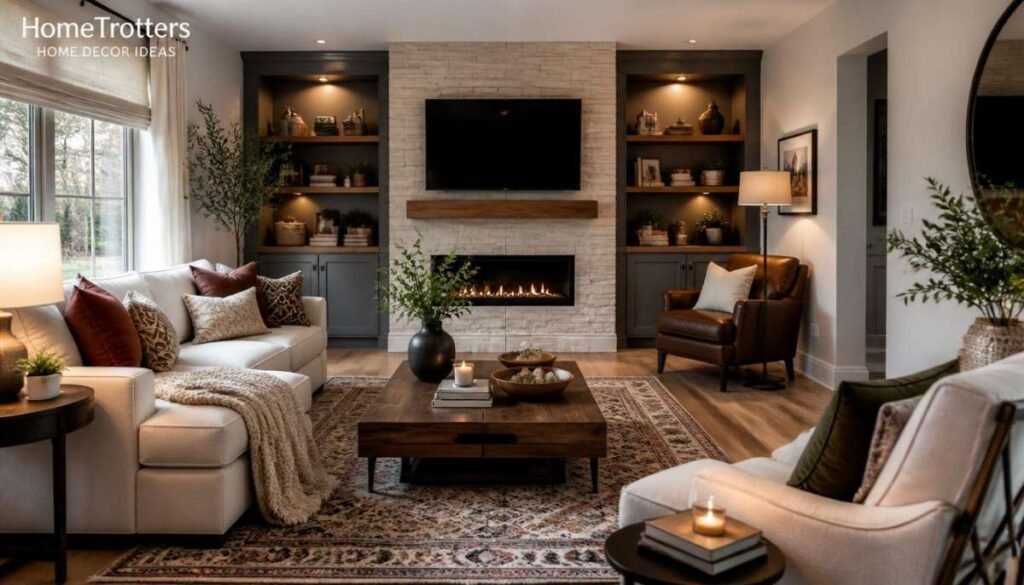
A lot of rooms don’t actually need more furniture. They need better balance. In most homes, that comes down to three things: color, texture, and lighting. When those three work together, even a simple room feels more polished.
Color is typically the best starting point A room tends to feel calmer when most of it stays within one main color family and the contrast comes in through smaller accents. That doesn’t mean everything has to match, but it does help when the room has a visual base. Soft whites, warm beiges, taupe, muted greens, deep blue accents, walnut wood, and black details can all work beautifully when they feel connected.
Texture is what stops the room from feeling flat. Depth comes from the details: the mix of a soft sofa, textured rug, warm wood, and smooth ceramic. Even a neutral room can feel rich if it has enough texture.
Lighting is the piece people often ignore, but it changes everything. A room lit only by one ceiling light usually feels colder than it should. Adding a table lamp, a floor lamp, or softer bedside lighting makes the room feel warmer almost immediately. If a space looks fine during the day but feels dull at night, lighting is usually the reason.
A home looks better when it feels edited, not crowded
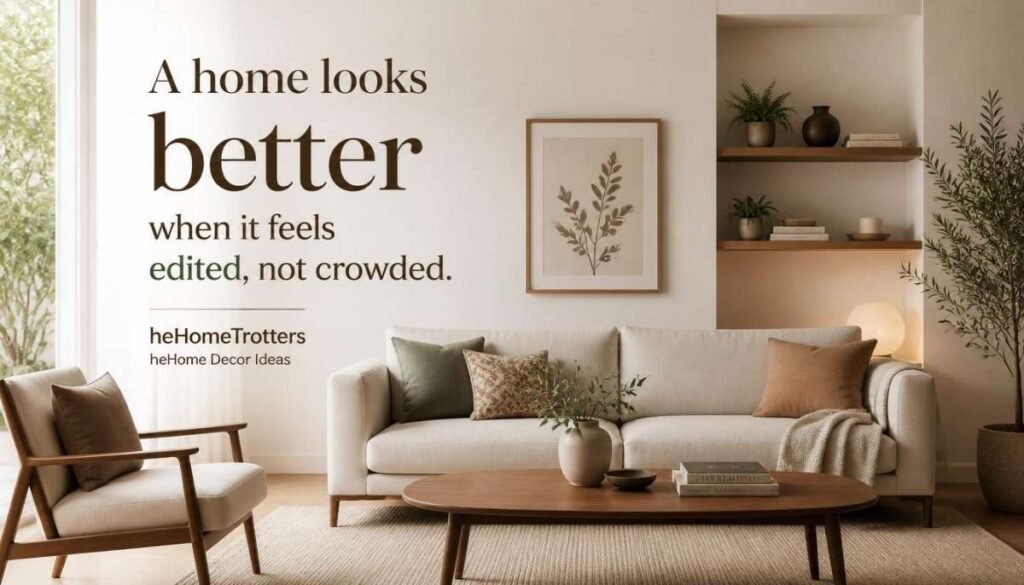
One thing stylish homes usually have in common is that they don’t try to decorate every single surface. They leave some breathing room.That’s a big part of what makes them feel so relaxing to be around.
A shelf doesn’t need ten tiny objects to look finished. A coffee table doesn’t need to be filled edge to edge. In fact, a room often looks better when the decor is more selective. A few books, one candle, a ceramic vase, a framed photo, or a small plant can do more than a pile of random accessories that don’t relate to each other.
This is also where personality matters. The rooms that feel most memorable usually have something personal in them. That could be travel finds, favorite books, handmade pieces, family photos, or art that actually reflects your taste. These details make a room feel lived in instead of staged.
Room-by-room TheHomeTrotters home decor ideas
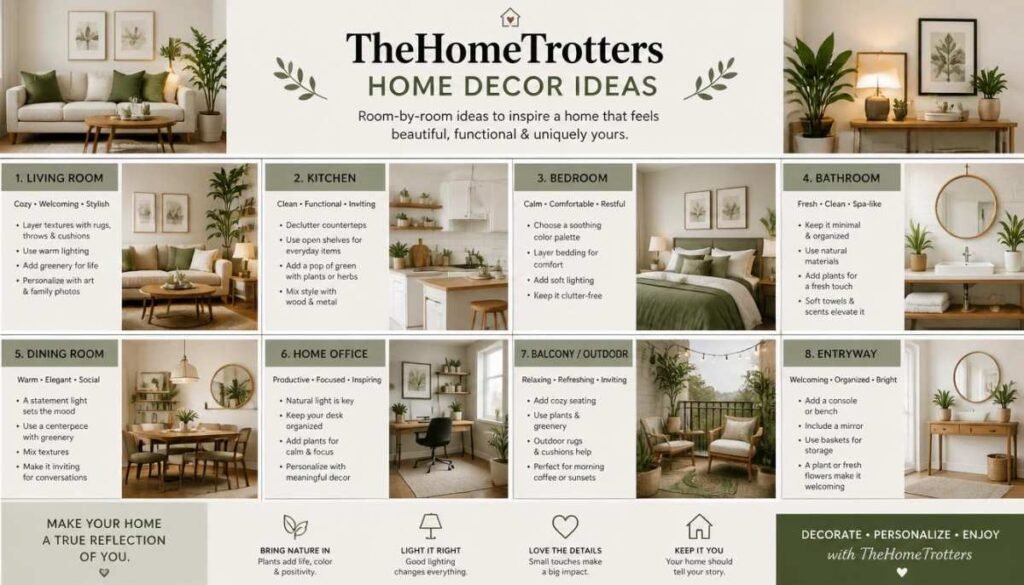
The easiest way to use TheHomeTrotters home decor ideas is to look at your home room by room. You do not need to fix everything at once. In most cases, one or two spaces are the ones bothering you anyway, so it makes more sense to start there.
Living room
If a living room feels unfinished, the problem is usually one of a few things. The rug may be too small, the lighting may be too harsh, or the room may not have enough texture to feel comfortable. Sometimes the layout is the real issue, especially if all the furniture is pushed against the walls and the seating area never feels anchored.
It’s amazing how a larger rug, warmer lighting, and a few thoughtfully chosen textiles can completely change how a room feels . Curtains also help more than people expect. When they’re hung a little higher and wider than the window, the room instantly feels more polished. Add one strong piece of art or a small gallery arrangement, and the space starts to feel much more complete.
Bedroom
Bedrooms respond best to softness. If the room feels plain or a little cold, start with the bed. Layered bedding in two or three tones usually makes a space feel calmer straight away. A rug under the lower part of the bed helps ground the room, and bedside lamps add warmth in a way overhead lighting never really can.
This is also one of the easiest rooms to overcrowd with little items. A bedroom usually feels better when the visible decor is simple. A lamp, a book, one decorative object, and a basket or bench if there’s space is often enough.
Kitchen
Kitchen decor works best when it still feels practical. Instead of filling counters with decorative pieces, focus on making everyday items look more intentional. A cutting board stack, a ceramic bowl, matching jars, or a small framed print can warm up the room without getting in the way.
Even small changes like clearing the counters, using a better runner, or swapping mismatched storage for something more cohesive can make the kitchen feel more styled.
Bathroom and entryway
Bathrooms and entryways are usually smaller spaces, but they still shape how the home feels. In a bathroom, simple upgrades like better towels, matching soap bottles, a small plant, or one natural texture can make the room feel much more finished.
An entryway doesn’t need much either. A slim console, a mirror, a tray for keys, and one decorative touch like a lamp or vase is often enough to make the space feel welcoming instead of forgotten.
Small updates usually make the biggest difference
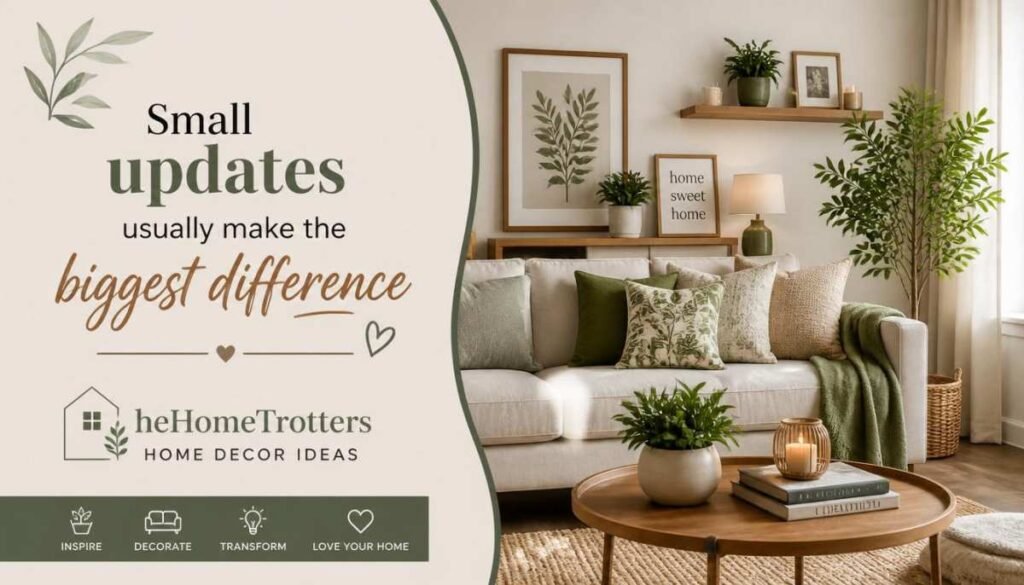
One of the best things about this style of decorating is that it doesn’t depend on big makeovers. In a lot of homes, the most effective updates are also the easiest ones.
A room with flat, tired cushions can feel completely different with better pillow covers. A dark corner can feel finished once you add a floor lamp. A bedroom that looks bland can come to life with layered bedding and one textured rug. Even decluttering can change the mood of a room more than buying something new.
That’s why budget decorating works best when you focus on the pieces that change the overall feeling of the room. Lighting, rugs, textiles, mirrors, and wall art usually give more visual impact than buying lots of small decorative objects.
Budget-Friendly TheHomeTrotters Decor Fixes
| Problem | Easy Decor Fix | Budget Level |
| Room feels flat | Add texture with pillows, curtains, baskets, or a rug | Low to medium |
| Room feels cold at night | Add a warm table lamp or floor lamp | Low to medium |
| Room feels cluttered | Remove filler decor and restyle one surface at a time | Free |
| Room feels too plain | Add art, a mirror, or a small gallery wall | Low to medium |
| Room lacks personality | Use books, travel finds, family photos, or collected pieces | Low to medium |
| Small room feels cramped | Use mirrors and multi-functional furniture | Medium |
| Seating area feels unfinished | Upgrade the rug and add layered cushions | Low to medium |
| Bedroom feels dull | Layer bedding, add soft lighting, and use a rug | Medium |
Common mistakes that make a room feel off
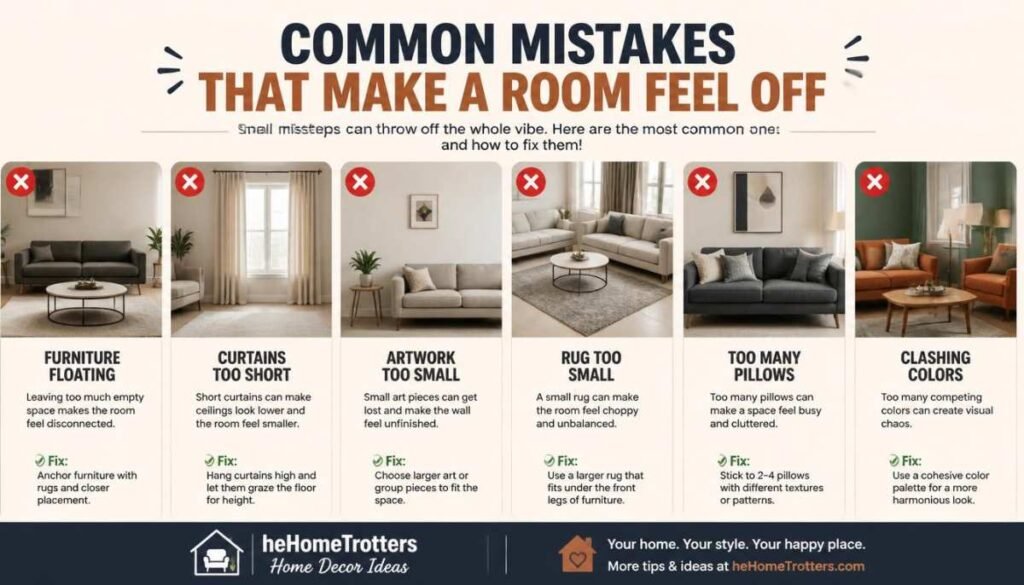
Most decorating mistakes don’t come from bad taste. They come from trying to fix a room too quickly without stepping back to look at the whole picture.
Sometimes the room feels off because the rug is too small or the art is hung too high. Sometimes there are too many tiny decor pieces competing for attention. In other cases, the room simply has no clear color direction, so everything feels disconnected even though each item looks fine on its own.
Lighting is another common problem. A beautiful room can still feel cold if the lighting is harsh or flat. And if the layout is awkward, no amount of decor will fully solve it. That’s why it helps to figure out what the room actually needs before buying more things for it.
The best way to use these ideas in your own home
The smartest way to use TheHomeTrotters home decor ideas is to stop thinking about decorating as one giant project. Start with the room that feels the most frustrating and ask what’s actually wrong with it. Does it feel too plain? Too cluttered? Too dark? Too cold? Does it have nice pieces but no real flow?
Once you know that, the next step becomes much easier. If the room feels flat, add texture. If it feels chaotic, simplify the palette and remove a few things. If it feels cold, work on the lighting. If it feels generic, bring in something personal.
That’s really the reason this decorating style works. It doesn’t ask you to build a perfect home. It asks you to make your home feel better, one thoughtful decision at a time.
FAQ Section
What are TheHomeTrotters home decor ideas?
TheHomeTrotters home decor ideas focus on making a home feel stylish, warm, practical, and personal without depending on expensive renovations. The overall idea is to use better styling choices, layered textures, balanced color, softer lighting, and decor that feels collected rather than random.
How can I decorate my home like a designer on a budget?
The easiest way is to focus on high-impact updates instead of trying to redo everything at once. Better lighting, a larger rug, improved bedding, thoughtful wall art, and fewer filler decor pieces can make a room feel much more polished without a big spend.
What is the 80/20 rule in home decor?
The 80/20 rule means around 80% of the room stays within one main color family, while the remaining 20% comes from accent colors and contrast details. It helps a room feel cohesive without looking too flat or overly matched.
What is the 3-5-7 rule in decorating?
The 3-5-7 rule refers to styling objects in odd-number groupings, especially groups of three, five, or seven. It’s often used on shelves, coffee tables, and consoles because those arrangements usually look more natural and balanced.

Ryan West is an interior design consultant and home styling expert with an eye for modern aesthetics. From transforming cramped kitchens into culinary havens to mastering the art of minimalist home decor, Ryan shares actionable tips to help you create a space that feels like luxury, no matter your budget.