

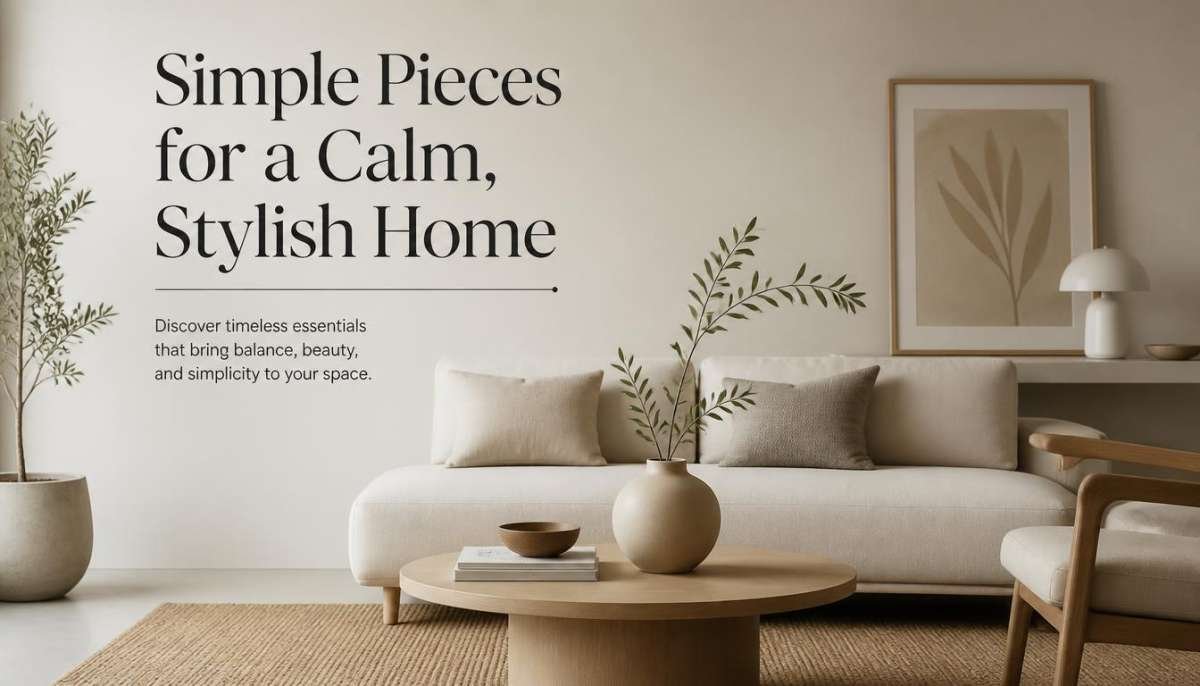
Minimalist home decor is not about making your home look empty. It is about choosing fewer things that work well, look intentional, and make everyday life easier.
The right minimalist home decor essentials can make a room feel brighter, calmer, and more spacious without removing all personality. The key is to balance clean furniture with warm textures, useful storage, soft lighting, and a few meaningful accents.
You do not need to replace everything at once. Start with the pieces that have the biggest visual and practical impact, then build the room gradually.
What Makes a Home Truly Minimalist?
Before buying minimalist furniture or accessories, understand the principle behind the style.
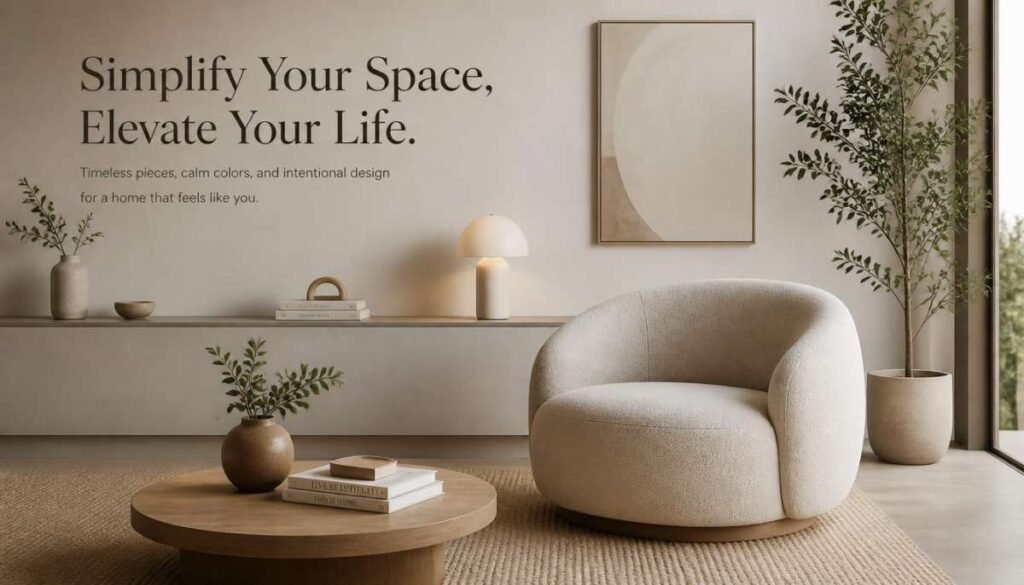
A minimalist room usually has a limited color palette, simple shapes, open surfaces, and furniture that serves a clear purpose. That does not mean every item must be white or completely plain.
Warm wood, natural fabrics, soft beige, muted green, black accents, handmade ceramics, and plants can all work beautifully in a minimalist space.
The goal is visual breathing room. When every surface is filled with decorations, even expensive furniture can lose its impact.
Choose Function Before Decoration
Ask yourself what each item actually does before bringing it home.
A coffee table should provide useful surface space. A storage cabinet should hide everyday clutter. A rug should define the seating area while adding comfort.
If something only takes up space and does not add beauty, comfort, function, or meaning, it may not deserve a permanent place in the room.
Keep a Consistent Color Story
A simple palette makes minimalist rooms feel connected.
Try two or three main colors, such as warm white, beige, and natural wood. You can then introduce a small amount of black, charcoal, olive, terracotta, or another muted shade for contrast.
You do not need to match every item perfectly. Repeating similar tones is usually enough to create a cohesive look.
Minimalist Home Decor Essentials to Prioritize
The best approach is to invest first in the pieces you use every day. Decorative objects can come later once the basic furniture, lighting, storage, and textiles are working together.
| Essential | What to Look For | Why It Matters |
|---|---|---|
| Comfortable sofa or seating | Clean shape, durable neutral fabric | Creates the main anchor |
| Simple coffee table | Proportional size, wood or stone | Adds function without visual weight |
| Practical storage | Closed fronts, simple hardware | Keeps clutter hidden |
| Area rug | Low-pile, neutral or subtle pattern | Adds warmth and defines space |
| Layered lighting | Ceiling, floor, and table sources | Prevents a flat or harsh room |
| Neutral textiles | Linen, cotton, wool, or textured fabric | Makes simplicity feel comfortable |
| Minimal artwork or mirror | One strong focal piece | Adds personality without clutter |
| Greenery | One or two suitable plants | Brings natural texture into the room |
1. Comfortable Seating With a Clean Shape
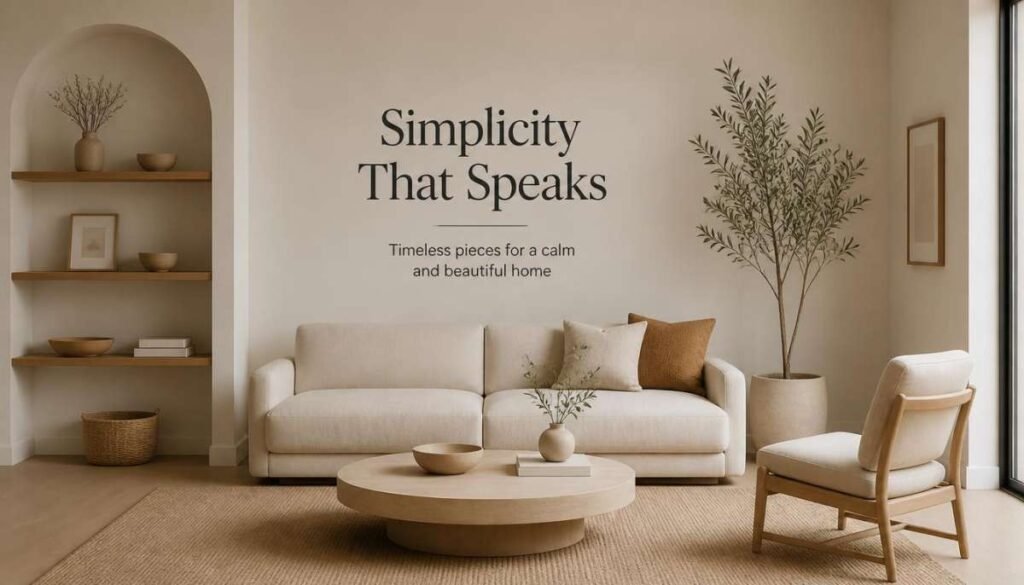
Your sofa or main seating is usually the largest visual element in a living room, so it deserves careful attention.
Look for simple silhouettes without excessive tufting, ornate arms, or complicated patterns. A sofa in oatmeal, cream, beige, gray, or another muted shade gives you flexibility when you change smaller accessories later.
Comfort matters just as much as appearance. A minimalist sofa should still have enough seat depth and support for how your household actually uses it.
For a small room, a compact sofa with one armchair can work better than a large sectional. Leave enough walking space around the furniture instead of filling every available corner.
Practical tip: Measure your doorway, staircase, and room before ordering a large sofa. A beautiful piece that cannot comfortably enter the room is an expensive mistake.
2. A Simple Coffee Table
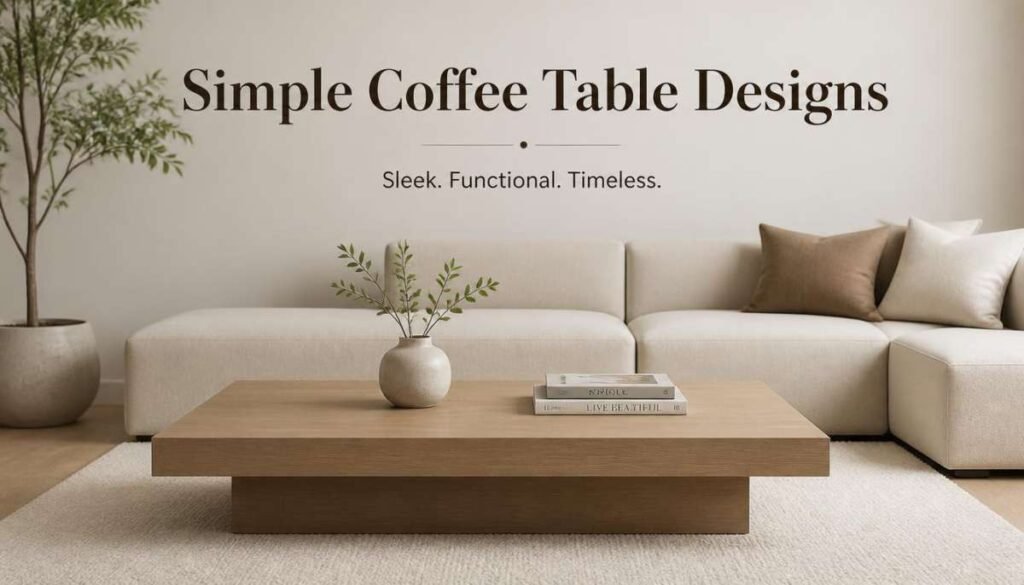
A coffee table gives the seating area a visual center while providing a useful place for drinks, books, or a small decorative object.
Choose a shape that works with your room. A rectangular table suits a longer sofa, while a round or oval design can make a smaller space easier to navigate.
Natural wood works especially well when the rest of the room contains neutral fabrics. Stone, glass, or a simple metal frame can create a more contemporary feel.
Avoid choosing a table simply because it looks minimal in a showroom. Consider its height, walking clearance, storage needs, and how much surface area you actually use.
Also Read : Modern Minimalist Kitchen Ideas for a Clean, Calm Space (2026 Guide)
3. Smart Storage That Keeps Clutter Out of Sight
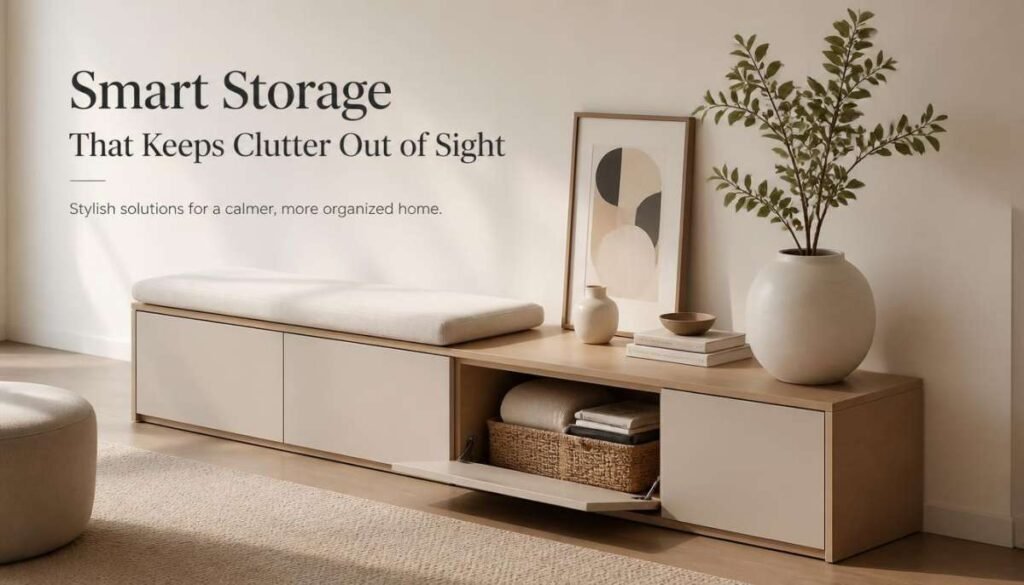
Storage is one of the most important minimalist home decor essentials because visual clutter can quickly destroy a calm design.
Closed cabinets, sideboards, drawers, baskets, and simple shelving can give everyday objects a designated home.
Think about the things that normally end up on your counters and tables. Remote controls, chargers, magazines, toys, blankets, paperwork, and small accessories should have somewhere to go.
If you have a small home, choose furniture that performs more than one job. An ottoman with hidden storage or a slim console with drawers can provide function without requiring another bulky piece.
Open Shelves Need Editing
Open shelving can look beautiful, but it should not become a dumping ground.
Display a few books, ceramics, plants, or meaningful objects and leave some empty space between them. Grouping everything together makes even attractive objects look messy.
4. A Textured Area Rug

Minimalist rooms can sometimes feel cold because they rely on simple furniture and restrained colors.
An area rug adds softness and helps visually connect separate pieces of furniture.
For a living room, choose a size that allows at least the front legs of your main seating to sit on the rug. A rug that is too small can make the furniture arrangement feel disconnected.
Low-pile wool, cotton, jute, or subtle woven designs can work particularly well. If the furniture is very plain, a rug with gentle texture can provide interest without introducing visual chaos.
Common mistake: Buying a tiny rug because it costs less. A properly sized rug often makes a larger difference than several small decorative accessories.
5. Layered Lighting Instead of One Harsh Light
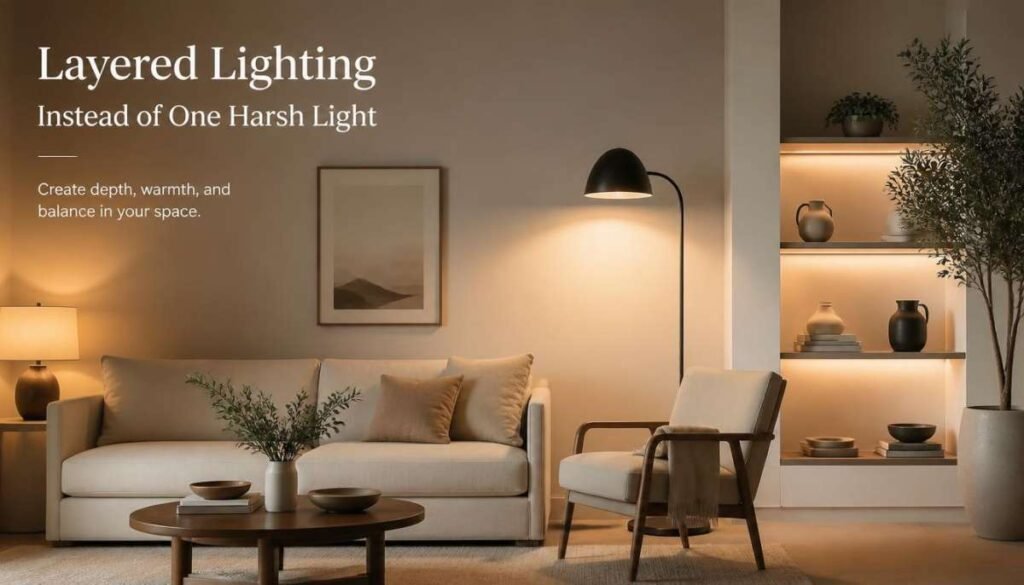
Lighting can completely change how minimalist interiors feel.
Instead of depending only on a bright ceiling fixture, combine different sources. A pendant or ceiling light can provide general illumination, while a floor lamp or table lamp adds softer light where you need it.
Warm bulbs usually create a more relaxed atmosphere in living rooms and bedrooms. For work areas, brighter neutral lighting can be more practical.
Portable lamps are also useful when you want to change the atmosphere without rearranging furniture.
Use Lighting as a Design Element
A minimalist light fixture can become a focal point without filling the room with decoration.
Choose a shape that complements your furniture rather than competing with it. Simple glass, matte finishes, natural materials, and sculptural forms can add character while keeping the overall look restrained.
6. Neutral Textiles That Add Warmth
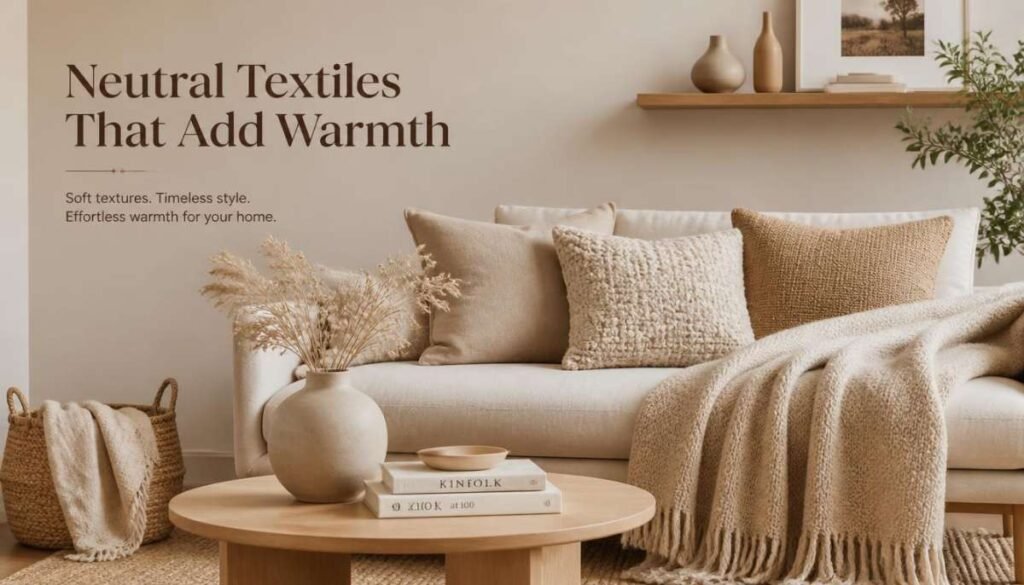
A minimalist room should not feel like a showroom.
Throws, cushions, curtains, bedding, and upholstery are what make simple spaces feel lived-in.
Instead of covering the sofa with many decorative pillows, choose two or three with different textures. Linen, cotton, boucle, wool, and woven fabrics can create depth even when they stay within the same color family.
A cream throw over a beige sofa may sound simple, but the difference in texture keeps the arrangement from looking flat.
7. One Strong Piece of Wall Art
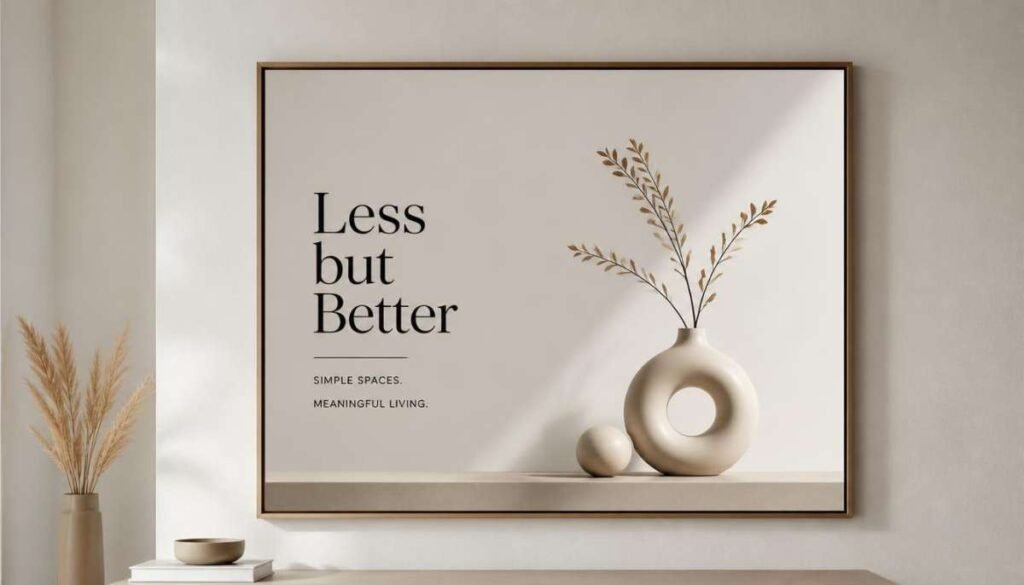
Empty walls are not automatically minimalist. Sometimes one carefully chosen artwork can make the room feel more finished.
Instead of creating a crowded gallery wall, consider one large piece above the sofa, console, dining table, or bed.
Abstract artwork, black-and-white photography, simple botanical prints, textured artwork, and understated line art can all work well.
Pay attention to scale. A tiny frame above a large sofa can look accidental, while an appropriately sized piece can become the room’s visual anchor.
Tip: If you already have several strong furniture pieces, choose quieter artwork. If the furniture is extremely simple, the artwork can provide more personality.
8. A Well-Placed Mirror
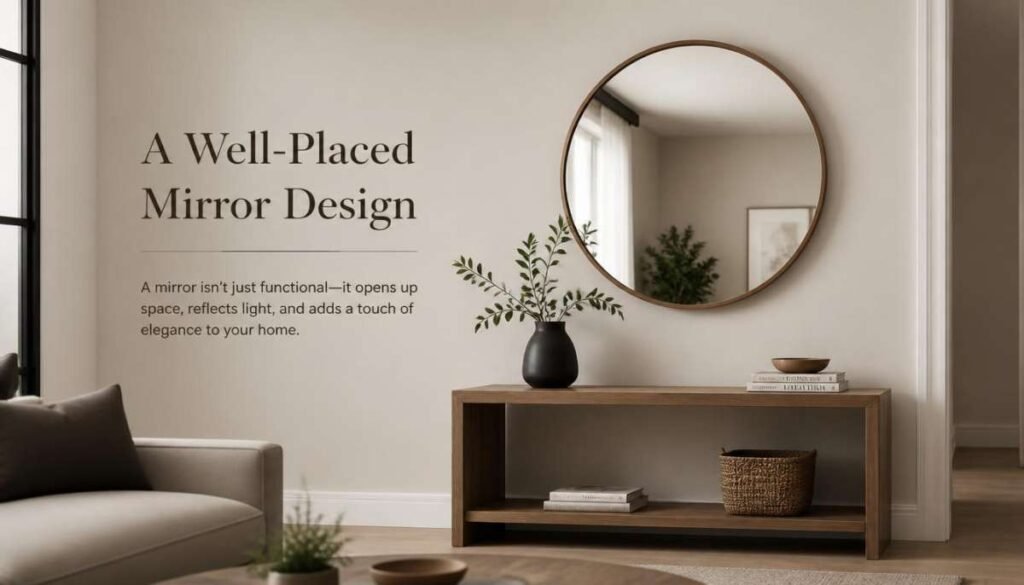
A mirror can serve both a decorative and practical purpose.
Large mirrors can help reflect natural light and make a smaller room feel more open. They are particularly useful near windows or opposite a source of light.
Choose a frame that fits your existing materials. A thin black frame gives a sharper modern look, while wood can make the space feel softer and warmer.
Do not place a mirror where it simply reflects a cluttered corner. Think about what the mirror will show before hanging it.
9. Natural Materials and Greenery
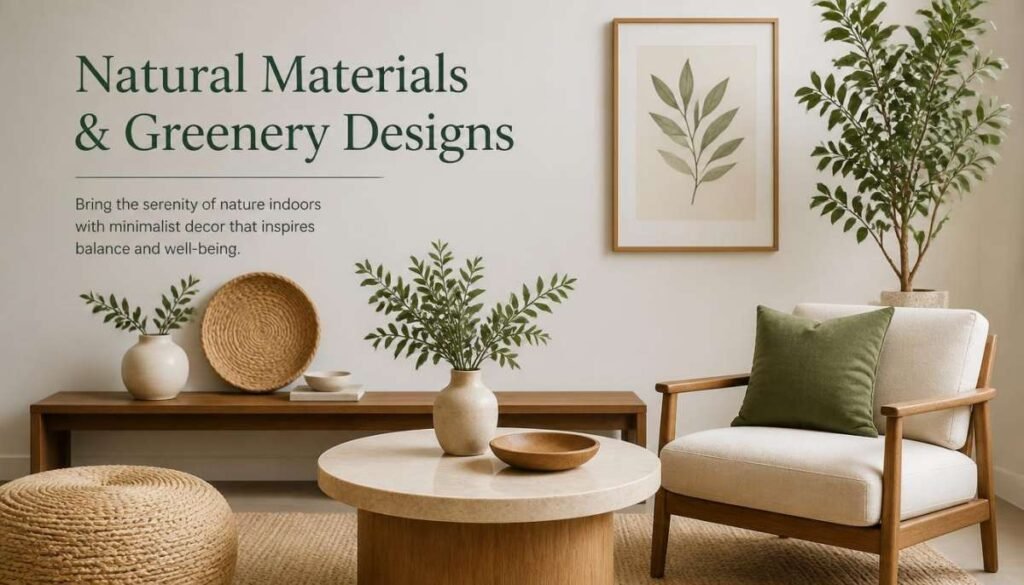
Minimalist interiors benefit from natural variation.
Wood, stone, ceramic, linen, cotton, wool, rattan, and glass can prevent a neutral room from becoming visually boring.
Plants are another easy way to introduce organic shape and color. One large plant in an empty corner can often have more impact than several small decorative objects spread around the room.
Choose plants according to the actual light and humidity in your space rather than buying one purely for appearance.
If you do not have suitable conditions for live plants, a simple branch arrangement or dried botanical display can provide a similar natural element.
10. Meaningful Accessories Instead of Collections
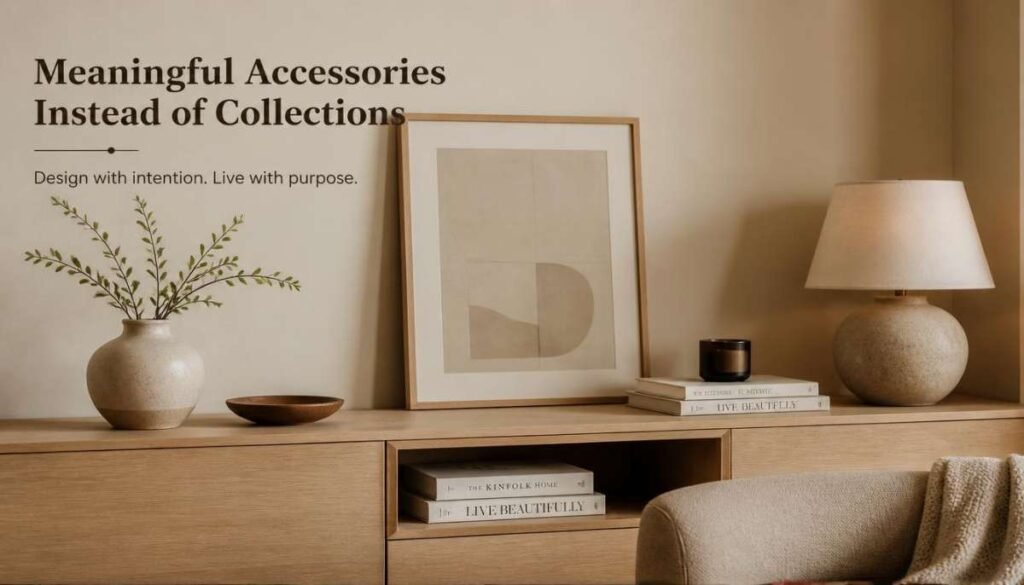
Minimalism does not mean removing everything personal from your home.
The difference is editing.
Instead of displaying ten small objects, choose one ceramic vessel, a favorite photograph, a sculpture, a beautiful bowl, or a small stack of books that actually means something to you.
Give each piece enough surrounding space to be noticed.
This creates a more intentional look and allows your favorite objects to become part of the design rather than disappearing into a crowded collection.
How to Make a Minimalist Home Feel Warm
One of the biggest problems with minimalist decorating is creating a room that feels sterile.
The solution is not adding lots of decoration. It is adding the right textures.
Combine smooth surfaces with something tactile. Pair a clean-lined sofa with a woven rug, a wooden table with ceramic accessories, or simple bedding with a textured throw.
Warm lighting also makes a major difference.
A room filled with white surfaces and cool overhead lighting can feel clinical. Soft lamps, natural wood, warm fabrics, and subtle earthy tones create a much more comfortable result.
Minimalist Decor Ideas for Small Spaces
Small rooms benefit from minimalist principles because visual clutter makes limited space feel even smaller.
Start with furniture that fits the room rather than choosing oversized pieces and trying to work around them.
Use vertical storage when floor space is limited. A tall cabinet, wall-mounted shelf, or narrow bookcase can provide useful storage without taking up much floor area.
Mirrors can also help visually expand the room, while furniture with exposed legs can make the floor feel more open.
Avoid buying multiple small pieces just because they physically fit. One properly scaled piece can often make a small room look more organized.
Minimalist Bedroom Essentials
The bedroom should feel restful rather than overly decorated.
Start with a simple bed frame, comfortable bedding, two useful bedside surfaces, and soft lighting.
Choose bedding in a restrained palette and introduce texture through a quilt, blanket, or upholstered headboard.
Keep the nightstand practical. A lamp, book, small tray, and perhaps one personal object are usually enough.
If your bedroom becomes cluttered easily, prioritize bedside drawers and closed storage over decorative surfaces.
Minimalist Kitchen and Dining Essentials
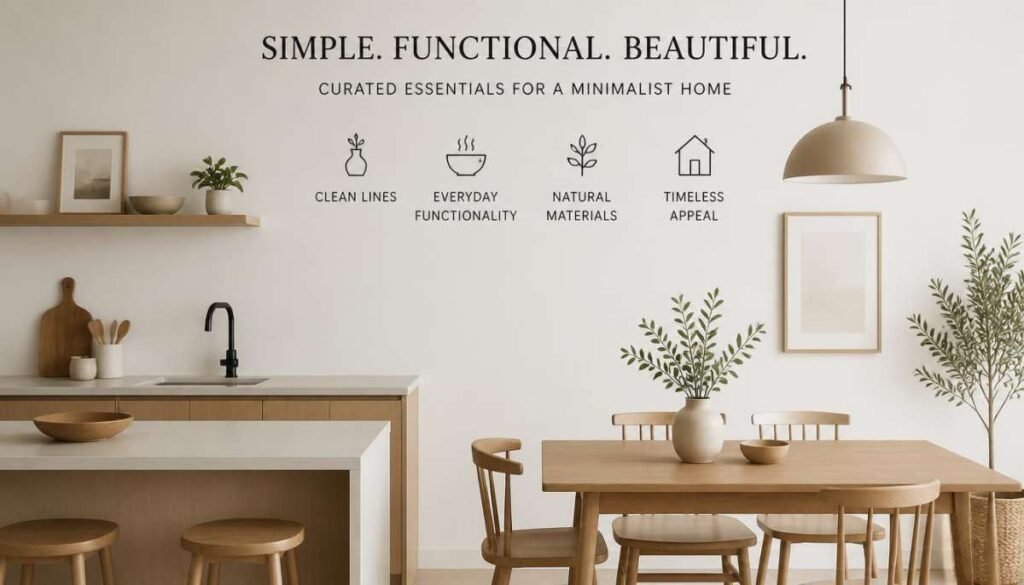
Minimalism works especially well in kitchens because clear counters immediately make the space look more organized.
Keep only frequently used appliances and tools visible. Store the rest inside cabinets or drawers where possible.
For the dining area, choose a table with a simple silhouette and chairs that are comfortable enough for regular use. A single pendant light above the table can provide both function and visual focus.
A ceramic bowl, simple vase, or small plant can finish the table without turning it into a permanent display shelf.
What to Skip When Decorating a Minimalist Home
Minimalism becomes much easier when you know what not to buy.
Avoid purchasing several small decorations simply because they are inexpensive. Five low-impact items can create more visual noise than one well-chosen piece.
Be cautious with furniture that has excessive ornamentation, complicated patterns, or too many competing finishes.
You also do not need to buy an entire matching furniture set. A coordinated room usually looks more natural when a few materials and shapes repeat without everything being identical.
Most importantly, do not remove useful objects just to make the room look empty. A home should support the way you live.
Common Minimalist Decorating Mistakes
Making Everything White
White can create a beautiful minimalist foundation, but too much of it can make a room feel flat or cold.
Add natural wood, warm neutrals, greenery, and different fabrics to create depth.
Buying Too Much “Minimalist” Decor
A common mistake is buying dozens of objects marketed as minimalist.
Minimalism is about editing, not shopping for more things that look minimal.
Ignoring Scale
A tiny rug, undersized artwork, or miniature coffee table can make an otherwise well-designed room feel unfinished.
Measure your space before buying major pieces.
Forgetting Everyday Storage
A room can look perfect immediately after cleaning but quickly become cluttered if there is nowhere to put everyday belongings.
Plan storage around real habits rather than an idealized lifestyle.
Sacrificing Comfort for Appearance
Minimalist furniture should not be uncomfortable.
Choose pieces that look simple but still support how you sit, work, eat, relax, and sleep.
How to Build a Minimalist Room on a Budget
You do not need a luxury budget to create a minimalist interior.
Start by removing unnecessary items and rearranging what you already own. This costs nothing and often reveals which pieces are actually missing.
Then prioritize purchases according to impact.
First: seating and essential furniture.
Second: storage.
Third: lighting and rug.
Fourth: textiles.
Last: artwork and decorative accents.
This approach prevents you from spending your entire budget on accessories while the basic room still feels uncomfortable or disorganized.
When shopping, spend more on pieces that receive daily use and less on items that are easy to replace.
A Simple Minimalist Decorating Checklist
Before you consider the room finished, walk through it and ask:
- Can I move around comfortably?
- Does every major piece serve a purpose?
- Are the surfaces unnecessarily crowded?
- Do I have enough closed storage?
- Does the lighting work at different times of day?
- Are the colors connected?
- Is there enough texture to make the room feel warm?
- Does the room contain anything personal?
- Are the rug and artwork properly scaled?
- Would removing one object improve the space?
If the answer is yes to most of these questions, you are probably much closer to a successful minimalist interior.
Also Read: [Boho Home Office Decor Ideas]
Also Read: [Laundry Room Decor Ideas]
Creating a Minimalist Home That Still Feels Like You
The best minimalist homes are not completely empty. They are edited with intention.
Choose furniture that supports your lifestyle, storage that controls everyday clutter, lighting that creates atmosphere, and textiles that make simple spaces comfortable.
Then add only the objects you genuinely enjoy seeing.
That is what makes minimalist home decor work. You are not decorating less simply for the sake of having less. You are creating more room for comfort, function, light, and the things that actually matter.
Frequently Asked Questions
What are the most important minimalist home decor essentials?
The most important essentials include comfortable seating, practical storage, a simple coffee table, a properly sized rug, layered lighting, neutral textiles, and a few meaningful accents.
How do I make my home look minimalist without making it feel empty?
Focus on quality, texture, and function instead of removing everything. Natural wood, woven fabrics, warm lighting, plants, and a few personal pieces can keep a minimalist home comfortable and inviting.
What colors work best for minimalist home decor?
Warm white, beige, cream, soft gray, taupe, and natural wood tones are popular choices. You can add muted green, charcoal, terracotta, or black as small accents.
How can I decorate a minimalist home on a budget?
Start by decluttering and rearranging what you already own. When buying new pieces, prioritize useful furniture, storage, lighting, and a rug before spending money on decorative accessories.
Does minimalist decor mean having no decorations?
No. Minimalist decor is about intentional decorating rather than having an empty room. Choose a few meaningful objects, artwork, plants, or ceramics and give them enough space to stand out.
How do I make a small room look more minimalist?
Use appropriately sized furniture, closed storage, light colors, and fewer decorative objects. A large mirror and furniture with visible legs can also help create a more open visual effect.

Ryan West is an interior design consultant and home styling expert with an eye for modern aesthetics. From transforming cramped kitchens into culinary havens to mastering the art of minimalist home decor, Ryan shares actionable tips to help you create a space that feels like luxury, no matter your budget.




1 comment
[…] you like this calm approach across the whole room, minimalist home decor essentials follow the same idea of fewer, well chosen […]