

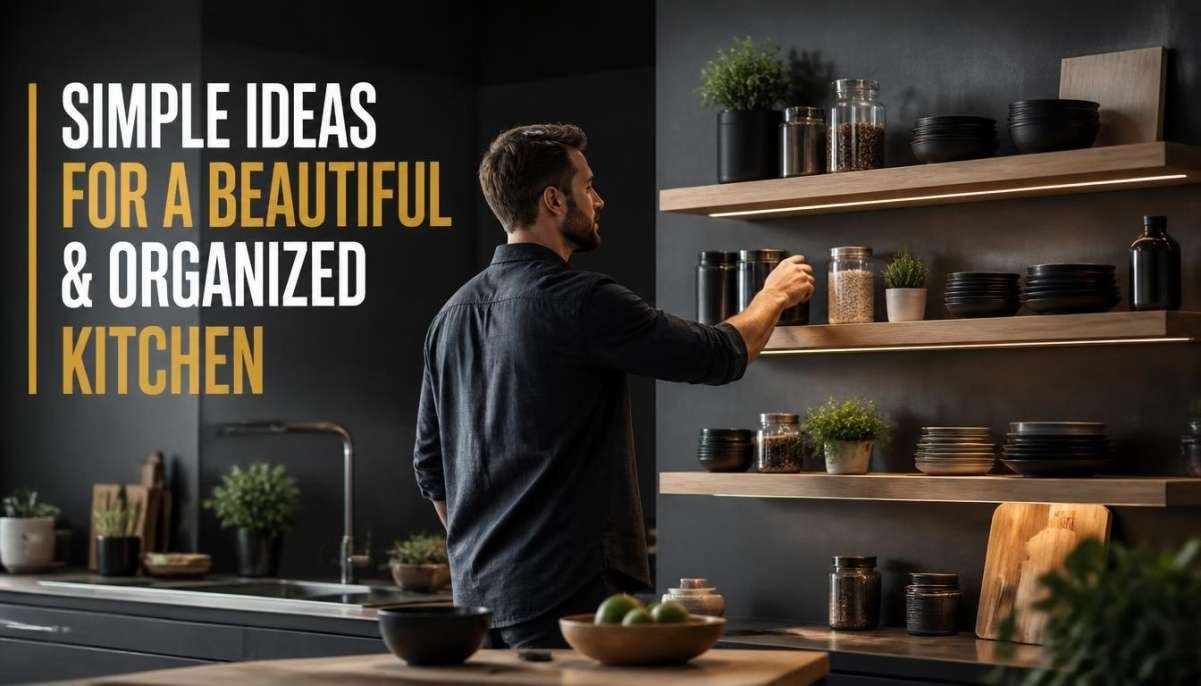
Kitchen shelves can do more than hold plates, cups, and storage containers. With a little planning, they can become one of the most attractive parts of your kitchen. The secret is to combine useful kitchen items with a few decorative touches, so your shelves look beautiful without becoming difficult to use.
If you are wondering how to decorate kitchen shelves, start with the things you already own. Arrange everyday dishes, add a few wooden or ceramic accents, introduce some greenery, and choose colors that work with the rest of your kitchen. You do not need expensive accessories or a complete kitchen makeover to create a polished look.
These practical decorating tips will help you style open shelves, floating shelves, and other kitchen storage spaces while keeping everything organized and easy to reach.
What to Consider Before Decorating Kitchen Shelves
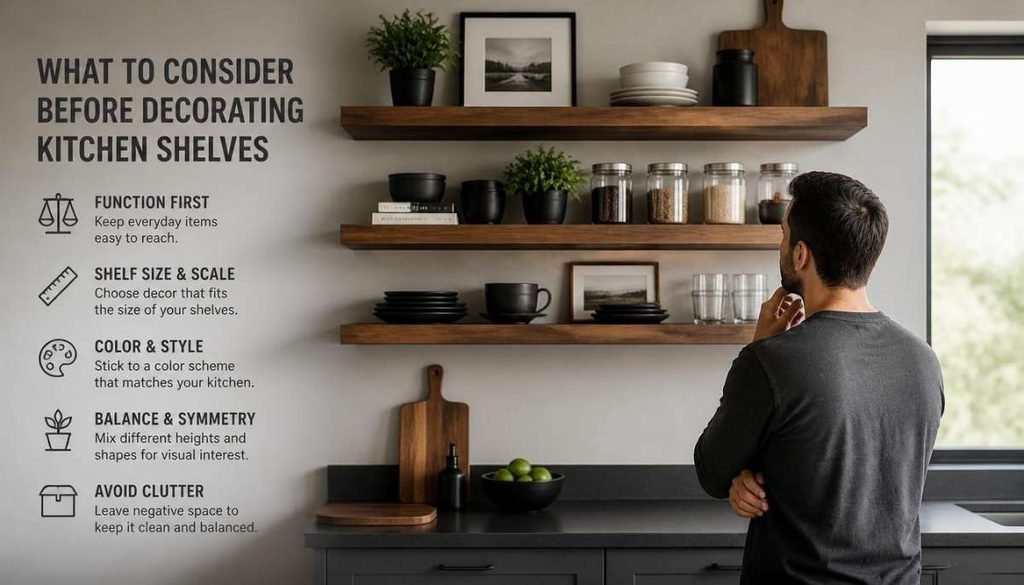
Before adding decorative pieces, take a moment to look at your kitchen and the shelves you want to style. A little planning can make the decorating process much easier.
Consider your kitchen style: Look at your cabinets, countertops, backsplash, and hardware. If your kitchen has natural wood and neutral colors, wooden boards and ceramic dishes may fit beautifully. For a modern kitchen, simple glassware and clean lined accessories can create a more coordinated look.
Think about shelf size: Small shelves need fewer items, while longer shelves can accommodate several groups of dishes and decorations. Make sure your accessories fit comfortably without making the shelves feel crowded.
Decide what you need to store: If you use open kitchen shelves every day, keep plates, mugs, and bowls within easy reach. Save the higher shelves for lighter decorative objects or items you use occasionally.
Check the shelf location: Shelves near a stove or cooking area may collect grease and food splashes more quickly. Choose items that are easy to clean in these areas, and avoid placing delicate decorations where they can be damaged by heat.
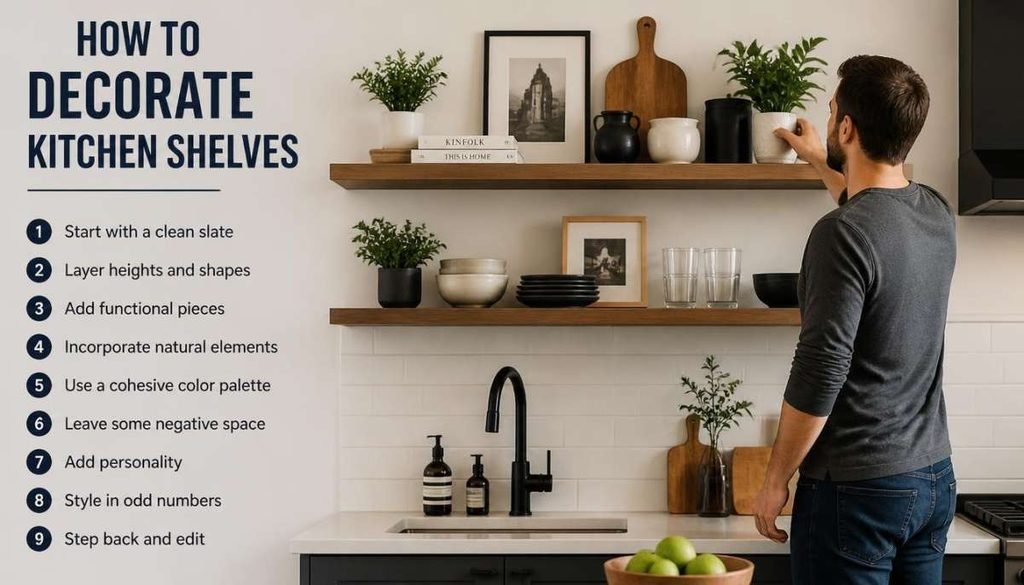
How to Decorate Kitchen Shelves: 9 Simple Steps
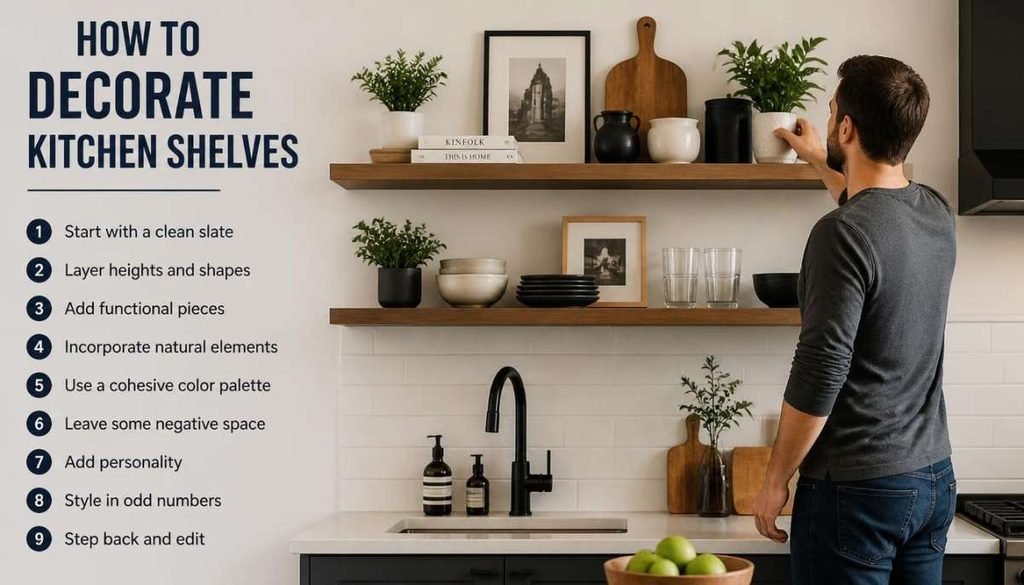
You can create an attractive shelf arrangement without buying everything new. Follow these steps to bring together your everyday kitchen essentials and favorite decorative pieces.
1. Start With a Clean and Empty Shelf
Remove everything from the shelves before you begin. Wipe away dust, grease, and stains, then look at the available space with a fresh perspective.
This is also a good time to remove chipped dishes, unused containers, and decorations that no longer suit your kitchen. Keeping fewer useful and attractive pieces makes the next steps easier.
Once the shelves are clean, separate your belongings into three groups: everyday essentials, occasional use items, and decorative accessories.
2. Choose a Color Scheme That Matches Your Kitchen
A consistent color palette helps kitchen shelves look connected rather than randomly arranged.
You can start with two or three main colors that already appear in your kitchen. For example, white dishes, natural wood, and beige accessories create a warm neutral look. White ceramics with black accents can give a modern kitchen a sharper appearance.
Some attractive combinations include:
- White, beige, and natural wood
- Cream, soft green, and warm brown
- Black, white, and clear glass
- Gray, white, and brushed metal
- Muted blue, cream, and light wood
You do not have to make every item match. A few repeated colors across different shelves are enough to create a balanced display.
3. Use Everyday Dishes as Your Foundation
Plates, bowls, mugs, and drinking glasses are some of the easiest items to decorate with because they already belong in the kitchen.
Stack plates by size and place bowls nearby. Arrange mugs in a neat row or group them by color. If you have attractive serving dishes, use them as part of the display instead of hiding everything inside cabinets.
Keep the items you reach for most often on lower shelves or within comfortable reach. This makes your kitchen easier to use and gives the arrangement a natural, lived in appearance.
4. Add Height With Cutting Boards, Trays, and Cookbooks
A shelf can look flat when every item has the same height. Adding a few taller pieces creates visual interest and makes the arrangement feel more intentional.
Wooden cutting boards are especially useful because they bring warmth and natural texture to a kitchen. Lean one or two boards against the wall behind a stack of plates or a serving bowl.
Cookbooks can also add height and personality. Stack a small number horizontally or stand a few upright with attractive covers facing outward.
Make sure tall pieces are stable and do not interfere with items on the shelf above.
5. Mix Different Materials and Textures
Using too much of one material can make a shelf arrangement look plain. Mixing a few different textures creates a more interesting display.
Try combining:
- Ceramic plates with clear glass jars
- Wooden boards with white stoneware
- Woven baskets with metal accessories
- Smooth glassware with textured pottery
- Linen details with natural wood
The goal is to create contrast without introducing too many competing finishes. Choose materials that complement your kitchen rather than filling the shelves with unrelated decorations.
6. Use Baskets and Matching Containers for Storage
Baskets and containers are useful when you want your kitchen shelves to look organized while still storing practical items.
Small woven baskets can hold napkins, tea towels, or other loose accessories. Glass canisters work well for dry ingredients such as pasta, rice, coffee, and oats, provided they are suitable for food storage and properly sealed.
Ceramic jars can also add color and texture while keeping smaller kitchen essentials together.
Try grouping similar containers instead of scattering them across different shelves. Matching shapes or repeated materials can make even simple storage look decorative.
7. Add Small Plants or Fresh Herbs
A little greenery can make kitchen shelves feel more welcoming. Small potted plants, herbs, or trailing greenery can soften the appearance of dishes and storage containers.
If you enjoy cooking, a small herb pot may be both decorative and useful. Choose a suitable location with enough natural light for the plant you select.
Keep plants away from direct heat, cooking splashes, and places where they could fall. Use waterproof trays or saucers to protect wooden shelves from moisture.
8. Create Small Groups Instead of Filling Every Space
One common decorating mistake is placing something in every available spot. This can make shelves look crowded, even when all the individual items are attractive.
Instead, arrange objects in small groups. For example, place a stack of plates beside a serving bowl, or combine a small cookbook stack with a ceramic jar.
The rule of three can help when arranging smaller decorative objects. A group of three pieces with different heights often looks more natural than three identical objects placed in a straight line.
You do not have to follow this rule everywhere. The important thing is to create visual balance and leave enough empty space around each group.
9. Finish With One or Two Personal Decorative Pieces
Once the functional items are in place, add a few accessories that reflect your taste.
A small framed print, decorative vase, handmade pottery piece, or attractive serving dish can give your shelves personality. You might also display a vintage bowl or a piece of artwork that complements your kitchen colors.
Keep these additions limited. A few meaningful pieces usually look better than a collection of unrelated ornaments.
What to Put on Kitchen Shelves
Not sure which items belong on your shelves? The best choices are usually a mixture of attractive kitchen essentials and a few decorative accents.
Plates, Bowls, and Mugs
Everyday dishware is a natural starting point for kitchen shelf decor. Stack plates neatly, arrange bowls by size, and keep mugs together. If your dishes share a similar color or finish, they can create a coordinated display without extra decorations.
Glass Jars and Canisters
Glass jars are useful for storing dry food and adding a clean, organized appearance. You can display pasta, grains, coffee, or other pantry staples in suitable airtight containers.
Choose containers that are easy to open, clean, and refill.
Wooden Cutting Boards
Cutting boards add warmth and natural texture to open kitchen shelves. Different wood tones can also complement neutral kitchens, white cabinets, and farmhouse interiors.
Choose a few attractive boards and arrange them upright where they can remain stable.
Cookbooks and Recipe Books
A small collection of cookbooks can make your kitchen feel more personal. Stack them horizontally or place a few upright beside a decorative object.
Choose books you actually enjoy using rather than filling the shelves with books purely for decoration.
Baskets and Storage Boxes
Woven baskets are helpful for organizing smaller items that might otherwise make shelves look messy. They work particularly well for napkins, tea towels, and other lightweight accessories.
Small Plants and Decorative Accessories
Small plants, ceramic vases, framed artwork, and decorative bowls can bring personality to your shelves. Use these pieces sparingly so your kitchen remains practical.
Kitchen Shelf Decorating Ideas for Different Styles
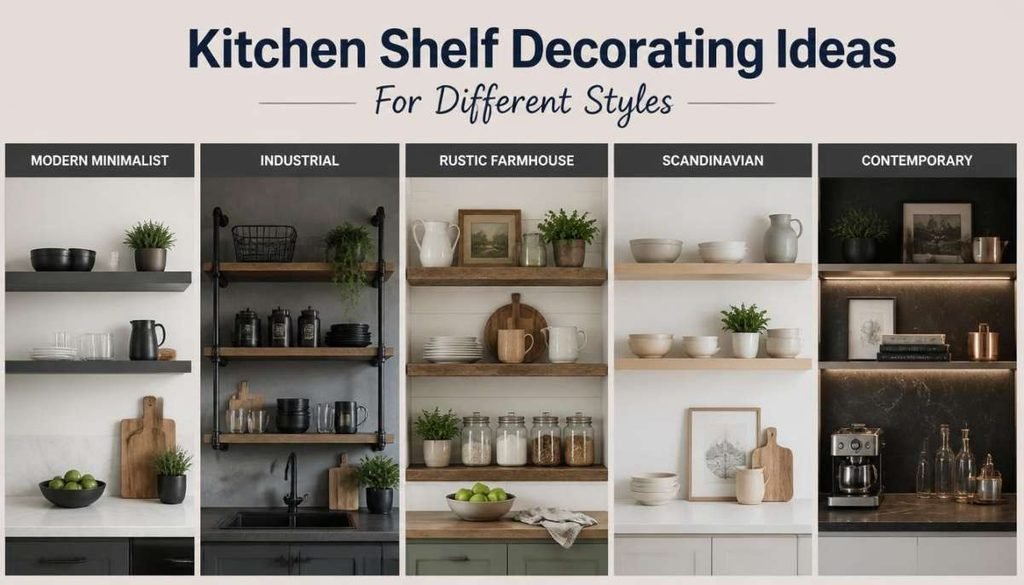
The same decorating principles can create very different results depending on your kitchen design. Here are a few styles to consider.
Farmhouse Kitchen Shelves
Farmhouse kitchen shelves often combine natural materials, soft colors, and simple everyday objects.
Use wooden cutting boards, white ceramic dishes, woven baskets, glass jars, and a few vintage inspired accessories. Muted green, cream, beige, and warm wood tones work particularly well.
Avoid filling every shelf with farmhouse signs or decorative objects. Functional pieces can create the farmhouse look without making the kitchen feel overly themed.
Modern Kitchen Shelves
For a modern kitchen, keep the arrangement simple and balanced. White or neutral dishes, clear glassware, smooth ceramic containers, and a few metal accents can create a clean appearance.
Use fewer decorative pieces and repeat similar shapes or finishes across the shelves. This helps the kitchen feel organized without looking too formal.
Minimalist Kitchen Shelves
Minimalist shelf decor is all about choosing fewer items and giving each one enough space.
Display a small collection of plates, a few mugs, one attractive vase, or a simple wooden board. Stick to a limited color palette and avoid unnecessary accessories.
The empty space is part of the design, not wasted storage.
Rustic Kitchen Shelves
Rustic shelves look especially attractive with natural textures and warm colors. Try wooden trays, handmade pottery, stoneware bowls, woven baskets, and glass storage jars.
You can also introduce darker wood tones or vintage kitchen pieces for a more traditional appearance.
Small Kitchen Shelf Decor
If your kitchen has limited space, focus on items that serve more than one purpose.
Use wall mounted shelves to display frequently used mugs, small plates, or neatly arranged jars. Choose compact baskets for smaller accessories and avoid bulky decorations.
Keeping the arrangement simple can help a small kitchen feel more open.
How to Keep Kitchen Shelves Looking Clean and Organized
Beautiful kitchen shelves need a little regular attention. Unlike closed cabinets, open shelving leaves dishes and decorative objects exposed to dust, cooking grease, and moisture.
Here are some simple ways to keep them looking their best.
Clean shelves regularly: Remove the displayed items when needed and wipe the shelf surface with a suitable cleaner. Follow the care instructions for the shelf material.
Wash unused dishes before using them: Glasses, plates, and bowls that sit on display for a long time may collect dust. Give them a quick wash before serving food.
Keep shelves away from heavy cooking splashes: If possible, avoid placing open shelves directly beside areas where oil and food frequently splatter.
Do not overload the shelves: Keep heavy dishes and cookware on sturdy, lower shelves. Check the shelf’s weight capacity and make sure its supports and wall fixings are suitable.
Refresh the arrangement occasionally: You do not need to buy new accessories every season. Moving a few items, changing a small plant, or displaying different serving pieces can give the shelves a fresh appearance.
Common Kitchen Shelf Decorating Mistakes to Avoid
Even attractive kitchen accessories can look out of place when they are arranged without a plan. Avoid these common mistakes:
- Filling every empty space: Overcrowding makes it harder to appreciate individual pieces. Leave some breathing room between groups.
- Using too many colors: Too many competing colors can make shelves look disconnected. Repeat a small selection of shades.
- Ignoring everyday convenience: Do not place frequently used plates and mugs on shelves that are difficult to reach.
- Displaying too many small decorations: Several tiny objects can create visual clutter. Choose a few larger or more meaningful accents instead.
- Mixing too many materials: Wood, glass, ceramic, and metal can work beautifully together, but too many finishes may make the display feel busy.
- Forgetting about cleaning: Open shelves need regular dusting and occasional washing of displayed items.
- Placing heavy items too high: Keep heavier objects on sturdy, lower shelves and check that the shelf is properly supported.
Frequently Asked Questions About Decorating Kitchen Shelves
How do I make kitchen shelves look nice?
Start with neatly arranged everyday dishes, then add a few decorative pieces such as wooden boards, glass jars, baskets, or small plants. Repeat a few colors and materials, vary the heights of objects, and leave open space between arrangements.
What should I put on decorative shelves in a kitchen?
You can display plates, bowls, mugs, glass jars, cookbooks, wooden cutting boards, woven baskets, small plants, ceramic vases, and framed artwork. Choose items that suit your kitchen style and serve a practical purpose whenever possible.
How do I make my shelves look nice without spending much money?
Start by rearranging items you already own. Use attractive dishes, cookbooks, cutting boards, glass containers, and small accessories. Remove unnecessary objects and group similar items together. A fresh arrangement can make a noticeable difference without requiring new purchases.
How do I decorate open kitchen shelves without making them look cluttered?
Avoid filling every space. Group similar items together, use a limited color palette, and leave visible gaps between arrangements. Store less attractive kitchen supplies in closed cabinets or baskets.
How often should I clean open kitchen shelves?
The cleaning frequency depends on how close the shelves are to cooking areas and how often you use them. Shelves exposed to grease and dust may need more frequent cleaning. Wash displayed dishes before using them if they have been sitting unused.
Are open kitchen shelves practical?
Yes, open kitchen shelves can be practical for frequently used dishes, mugs, and attractive storage containers. However, they require more regular cleaning than closed cabinets and are not ideal for every kitchen item. A combination of open shelves and closed storage often provides a useful balance.
Final Thoughts
Learning how to decorate kitchen shelves is mostly about finding the right balance between beauty and everyday use. Start with your favorite dishes, choose colors that complement your kitchen, and add natural textures through wood, glass, ceramics, and baskets.
You do not need to fill every shelf or purchase a collection of new accessories. A few carefully arranged pieces, enough open space, and a little regular cleaning can make your kitchen shelves look welcoming, organized, and stylish.

Ryan West is an interior design consultant and home styling expert with an eye for modern aesthetics. From transforming cramped kitchens into culinary havens to mastering the art of minimalist home decor, Ryan shares actionable tips to help you create a space that feels like luxury, no matter your budget.