

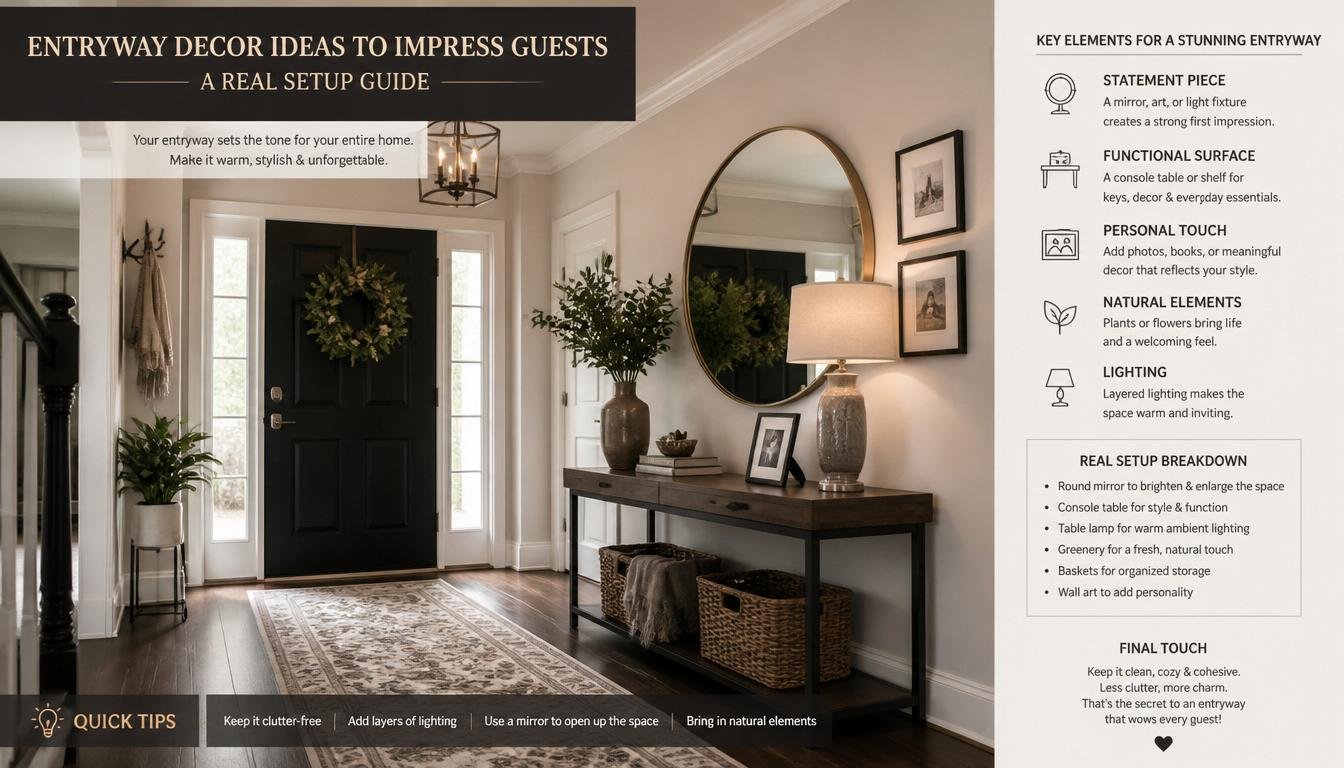
Your entryway does more work than almost any other space in your home, and it gets the least credit for it. It’s the room guests judge before they’ve even taken off their shoes and most of us walk through ours so fast we’ve never actually looked at it the way a first-time visitor would.
Good news: you don’t need a renovation budget to fix that. You need the right handful of pieces, placed with intention.
Why does the entryway matter so much for first impressions?
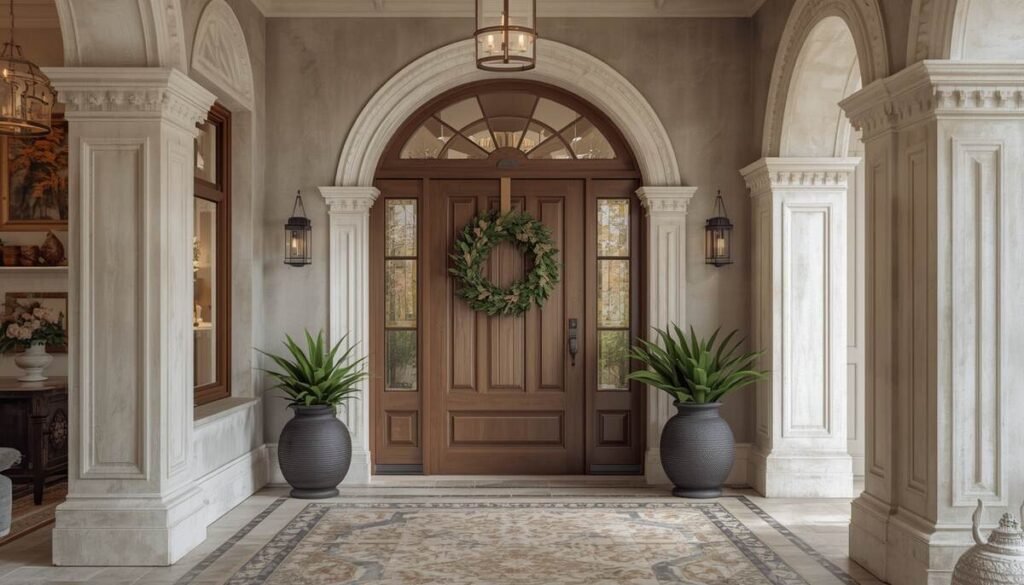
Because it’s the only room every single guest experiences, guaranteed, every time they visit. Psychologically, people form an impression of a space within seconds of walking in long before they reach your living room or kitchen. An entryway that feels considered signals that the rest of the home will be too.
It’s also doing double duty. It needs to function (shoes, keys, coats, bags) while still setting a tone. That tension is exactly why so many entryways end up cluttered and forgettable instead of intentional.
The four elements every impressive entryway actually needs
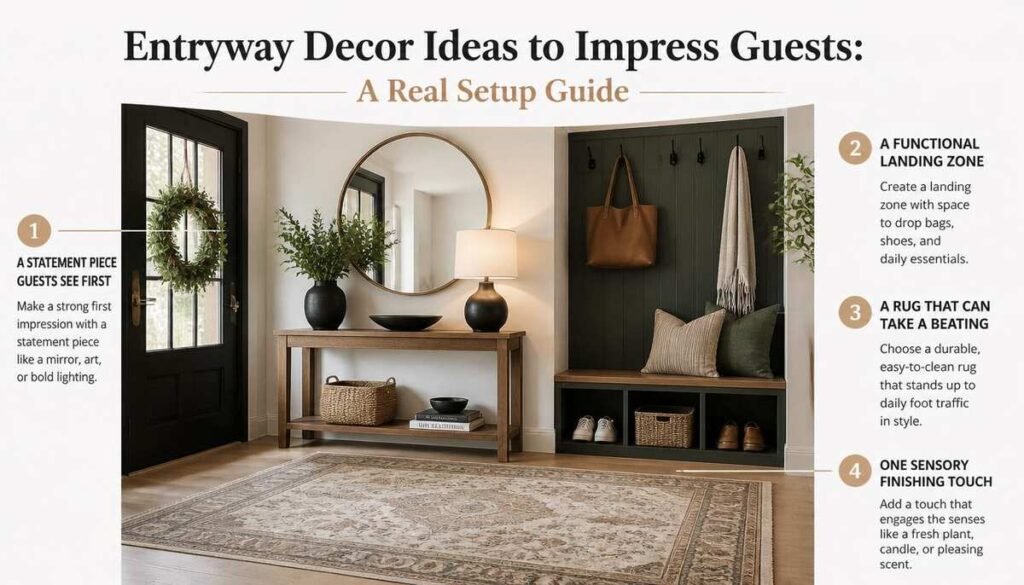
Skip the overwhelm of “50 ideas” lists for a second. Every entryway that reliably impresses guests is built from the same four ingredients, just styled differently depending on your taste.
1. A statement piece guests see first
This is whatever draws the eye the moment someone steps in an oversized mirror, a bold piece of art, or a sculptural light fixture. Designers frequently point to this as the single highest-impact move in a small space, since one striking piece does more visual work than five small decorative objects.
2. A functional landing zone
A console table, a bench, or even a wall-mounted shelf gives guests (and you) somewhere to set down keys, bags, or a hostess gift. The classic styling formula here is the “rule of three”: one taller object, one lower object, and one textural object think a lamp, a stack of books with a small sculpture on top, and a catch-all tray.
3. A rug that can take a beating
Entryways see more foot traffic than almost any other room, so the rug needs to look intentional and hold up. Vintage or antique-style rugs are a favorite here because their existing wear reads as character rather than damage a practical advantage over a pristine new rug that shows scuffs immediately.
4. One sensory finishing touch
This is the piece most lists skip entirely. A subtle candle or diffuser scent, warm (not harsh) lighting, or a small live plant near the door adds a layer guests register subconsciously. It’s the difference between a space that looks staged for photos and one that feels lived-in and welcoming.
Also Read : Modern Boho Style Home Decor: 7 Ideas That Feel Collected,.
Entryway decor ideas by style
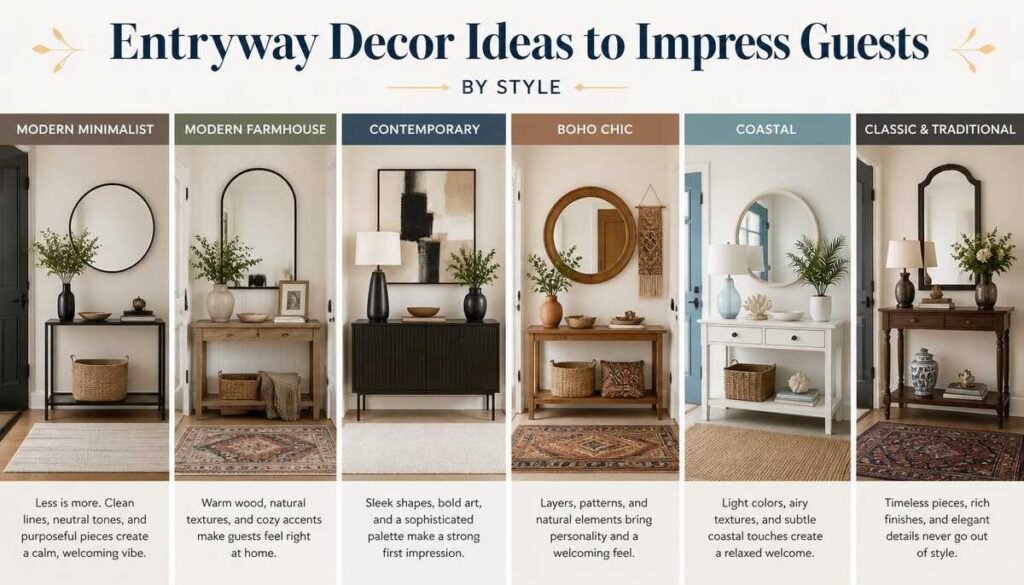
Not everyone wants the same look, so here’s how the four core elements translate across popular styles.
Minimalist entryway design
One striking mirror or art piece, a slim console in a single material, and a neutral rug. Let negative space do the work resist the urge to add a fifth object just to fill it.
Farmhouse entryway design
Reclaimed wood console, woven baskets for storage, a vintage-style runner rug, and warm ambient lighting like a lantern-style pendant.
Small space / apartment entryway design
A wall-mounted shelf instead of a console, a large mirror to visually expand the space, and hooks instead of a bench to save floor space entirely.
Boho entryway design
Layered textiles, a mix of vintage and handmade objects, macrame or woven wall hangings, and warm, low lighting rather than anything too bright or clinical.
Modern entryway design
A sculptural, single-material console (stone, metal, or lacquered wood), one oversized art piece, and a graphic rug in a bold but simple pattern.
Coastal entryway design
Light woods, woven jute or seagrass rugs, and airy linen or rattan accents. Keep the palette soft sandy neutrals, soft blue, and white and lean on natural light instead of heavy fixtures.
Traditional / vintage entryway design
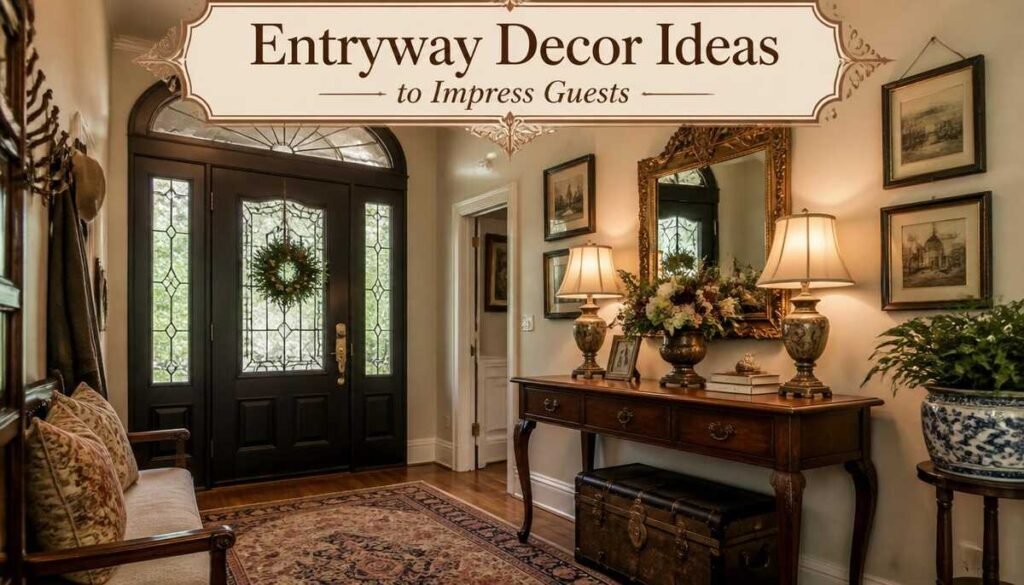
An antique or vintage-style console, a gilt-framed mirror, and a richly patterned runner rug. Brass or warm-toned lighting fixtures tie the look together without feeling dated.
Here’s how those seven styles stack up side by side:
Entryway Style Comparison Core Elements
| Style | Statement Piece | Rug Type | Lighting |
| Minimalist | Single oversized mirror or art | Solid neutral | Simple sculptural fixture |
| Farmhouse | Reclaimed wood console | Vintage-style runner | Lantern-style pendant |
| Small Space | Wall-mounted shelf + large mirror | Slim, low-pile runner | Wall sconces (saves floor space) |
| Boho | Layered textiles + woven wall art | Overlapping vintage rugs | Warm, low ambient lighting |
| Modern | Sculptural single-material console | Bold graphic pattern | Statement pendant or chandelier |
| Coastal | Woven rattan mirror or light art | Jute or seagrass | Natural light + soft linen shades |
| Traditional / Vintage | Gilt-framed mirror + antique console | Richly patterned runner | Brass or warm-toned fixtures |
What lighting works best in an entryway?
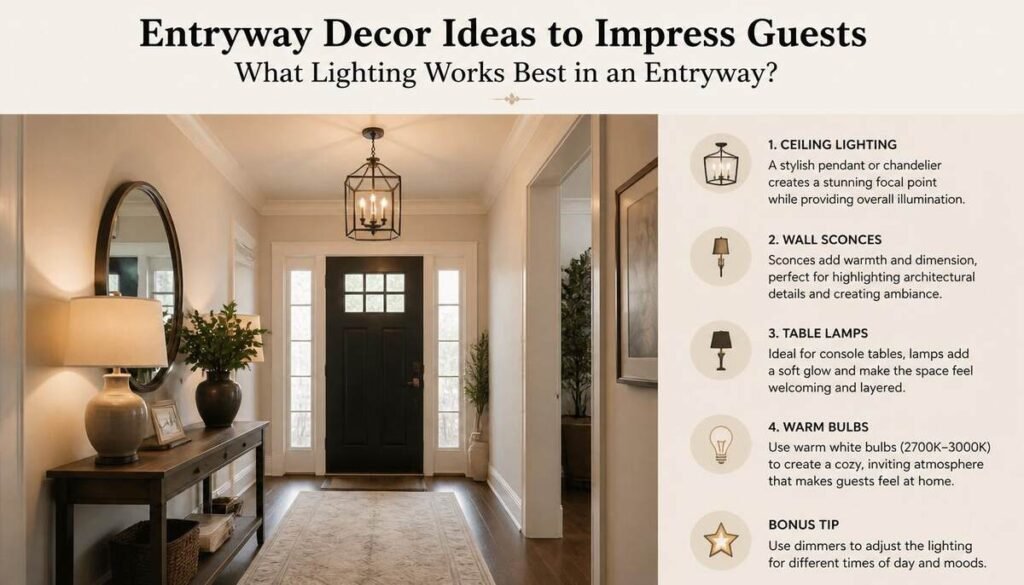
Warm, layered lighting beats one flat overhead bulb every time. Aim for a color temperature around 2700K–3000K (soft white, not stark blue-white) and combine at least two light sources instead of relying on a single fixture.
Overhead statement lighting
A pendant, small chandelier, or sculptural flush-mount fixture doubles as your “statement piece” and your main light source at once. This is usually the single highest-impact lighting upgrade in the whole space.
Wall sconces for depth
Sconces flanking a mirror or console add dimension without eating floor space especially useful in small entryways where a floor or table lamp isn’t practical.
Table or console lamps
A single lamp on your console adds warmth and softens the light at eye level, which reads as more inviting than overhead light alone, particularly in the evening.
Natural light amplification
If your entryway has a window or sidelight, a large mirror placed to reflect it will noticeably brighten the space during the day without adding any fixtures.
Dimmable, warm-toned bulbs
Swapping in dimmable, warm-white LED bulbs lets you adjust brightness for daytime versus evening hosting, and warm tones consistently read as cozier than cool white light in entry spaces.
Entryway wallpaper ideas
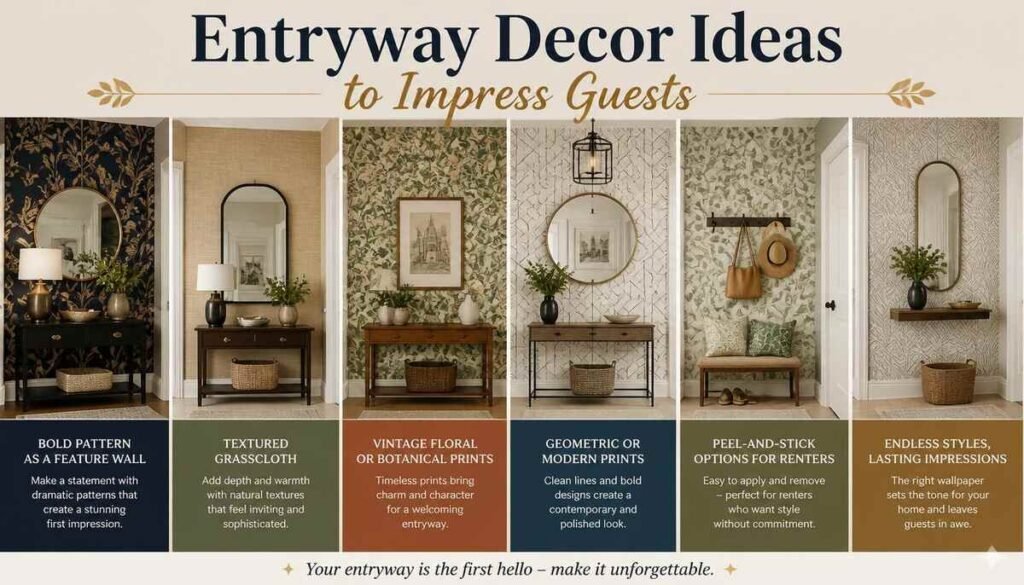
Wallpaper is one of the highest-impact, lowest-square-footage upgrades you can make, since most entryways are small enough that a bold choice feels intentional rather than overwhelming.
Bold pattern as a feature wall
A striking pattern on just the entryway walls creates instant visual impact right at the door, without needing to commit to it anywhere else in the home.
Textured grasscloth
Grasscloth or other natural-fiber wallpaper adds warmth and texture without relying on color or pattern, which pairs especially well with minimalist or coastal styling.
Vintage floral or botanical prints
These work well in traditional or vintage-styled entryways and pair naturally with a gilt mirror or antique console.
Geometric or modern prints
Clean geometric patterns suit modern or monochrome entryways and read as more contemporary than florals or damask patterns.
Peel-and-stick options for renters
Removable, peel-and-stick wallpaper delivers the same visual impact without violating a lease, and it’s easy to swap out if your style changes or you move.
Entryway Upgrade Ideas by Budget
| Budget Tier | What to Prioritize | Example Upgrade |
| Under $100 | Lighting swap, scent, styling existing pieces | New pendant bulb + reed diffuser + restyled console top |
| $100–$400 | One statement piece | Oversized mirror or vintage-style runner rug |
| $400–$1,000 | Console table + rug combo | New console table with a durable, textured rug |
| $1,000+ | Full furniture + lighting overhaul | Custom console, statement chandelier, art commission |
What guests actually notice (and what they don’t)
It’s worth knowing where to spend your effort. Guests consistently register scale, lighting, and whether a space feels intentional they rarely notice smaller decorative details unless something is visibly cluttered or mismatched. A few genuinely high-impact swaps beat a dozen small trinkets every time.
Budget-friendly ways to upgrade without a full redesign
You don’t need to replace every piece to see a real difference. A few of the highest-return, lowest-cost upgrades:
- Swap your current lighting for a single statement fixture this alone often changes the entire feel of the space.
- Add one oversized mirror, even leaned against the wall rather than mounted.
- Layer a smaller vintage-style rug over an existing one for texture without buying new flooring.
- Add a scent element — a reed diffuser or one well-placed candle.
- Repaint just the door or a single accent wall instead of the whole space.
Bottom line
An entryway that impresses guests isn’t about doing more it’s about doing the right four things well: a statement piece, a functional surface, a durable rug, and one sensory touch that finishes the space off. Build around those, adapt the style to your taste, and you’ll have a space that says “welcome” before you’ve said a word.
FAQ SECTION
What’s the single best way to make an entryway impress guests?
Add one statement piece guests see immediately an oversized mirror, bold art, or a sculptural light fixture since one striking element does more visual work than several small decorative pieces.
How much does it cost to upgrade an entryway?
It ranges widely: a lighting swap and styling refresh can cost under $100, while a full console-and-rug combo typically runs $400–$1,000 or more depending on materials.
What should I put on my entryway console table?
Follow the “rule of three”: one taller object (a lamp or vase), one lower object (a stack of books or a tray), and one textural piece (a small plant or sculptural object).
What kind of rug works best in a high-traffic entryway?
Vintage or antique-style rugs work especially well since their existing wear reads as character rather than damage, unlike a pristine new rug that shows scuffs quickly.
How do you decorate a small entryway or apartment landing spot?
Prioritize a wall-mounted shelf or hooks instead of a console to save floor space, and use a large mirror to make the area feel bigger.

Ryan West is an interior design consultant and home styling expert with an eye for modern aesthetics. From transforming cramped kitchens into culinary havens to mastering the art of minimalist home decor, Ryan shares actionable tips to help you create a space that feels like luxury, no matter your budget.