

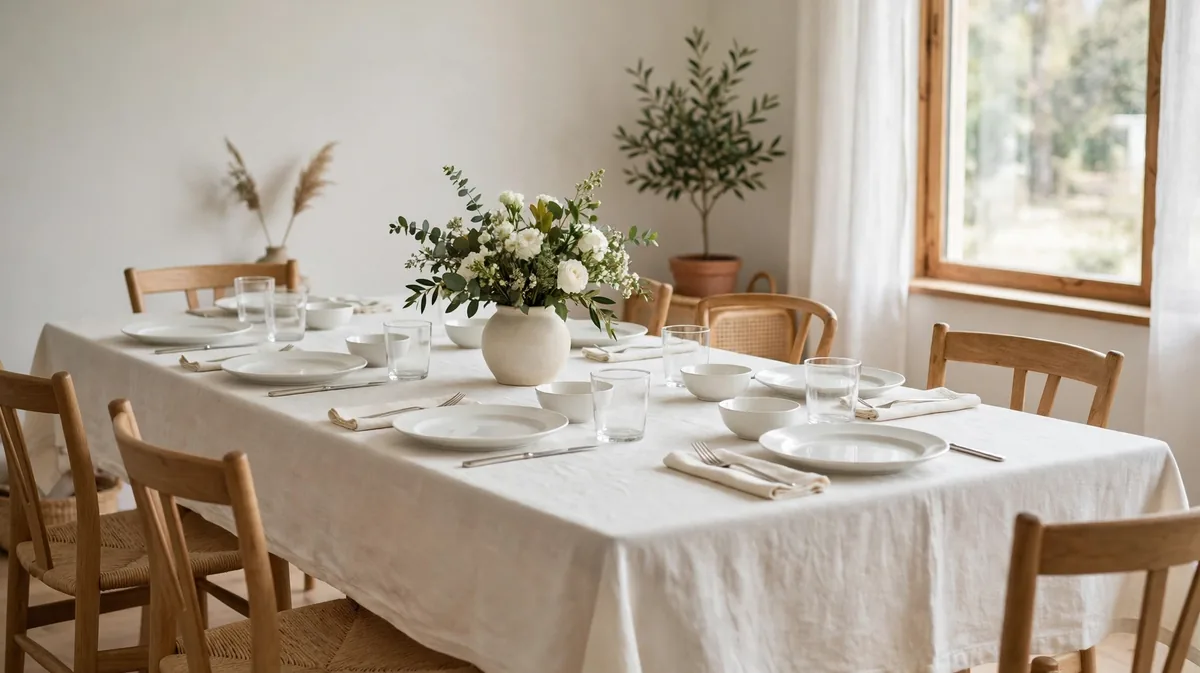
A dining table can look completely different with the right tablecloth. A simple piece of fabric can soften a wooden surface, introduce color into a neutral room, or make an ordinary family meal feel a little more special. You do not need expensive decorations or a professionally arranged tablescape to achieve that effect.
The best tablecloth decor ideas start with the way you actually use your table. A busy family dining area needs practical fabrics and easy-to-clean decorations, while a table used for entertaining can handle more elaborate layers, flowers, and decorative details.
From simple everyday arrangements to modern table covers, handmade designs, and creative DIY projects, there are many ways to refresh your dining space. Here are 16 ideas to help you find a style that feels right for your home.
1. Give a Plain Tablecloth a Natural Look
A plain tablecloth can be a beautiful starting point, especially when you prefer a calm and uncluttered dining space. Choose a soft shade such as oatmeal, ivory, beige, or sage green, then introduce a few natural accessories.
A small ceramic vase with fresh greenery, a wooden serving bowl, and simple dinnerware can make the arrangement feel complete. This approach works particularly well in homes with wooden furniture, neutral walls, or natural interior finishes.
2. Layer a Table Runner Over Your Tablecloth
Adding a runner is one of the easiest ways to change the appearance of an existing tablecloth. Instead of replacing the entire covering, place a contrasting strip of fabric down the center.
A cream tablecloth with a textured brown runner creates a warm farmhouse appearance. For something more contemporary, try a charcoal runner over a white tablecloth. You can also use a patterned runner when the base fabric is plain.
Keep the runner straight and centered for a neat appearance, or allow a little extra fabric to fall over the ends for a softer decorative effect.
3. Try Simple Tablecloth Decor Ideas with Minimal Accessories
You do not need several decorative pieces to make a table look attractive. Sometimes, a clean tablecloth and one carefully selected centerpiece are enough.
Choose a solid-colored fabric that complements your dining room. Add a small flower vase, a fruit bowl, or a decorative tray. Keep the remaining surface open so there is enough room for plates, glasses, and serving dishes.
This arrangement is especially useful for everyday meals because it looks attractive without creating extra work when you need to use the table.
If you like this calm approach across the whole room, minimalist home decor essentials follow the same idea of fewer, well chosen pieces.
4. Choose a Floral Tablecloth for a Softer Interior
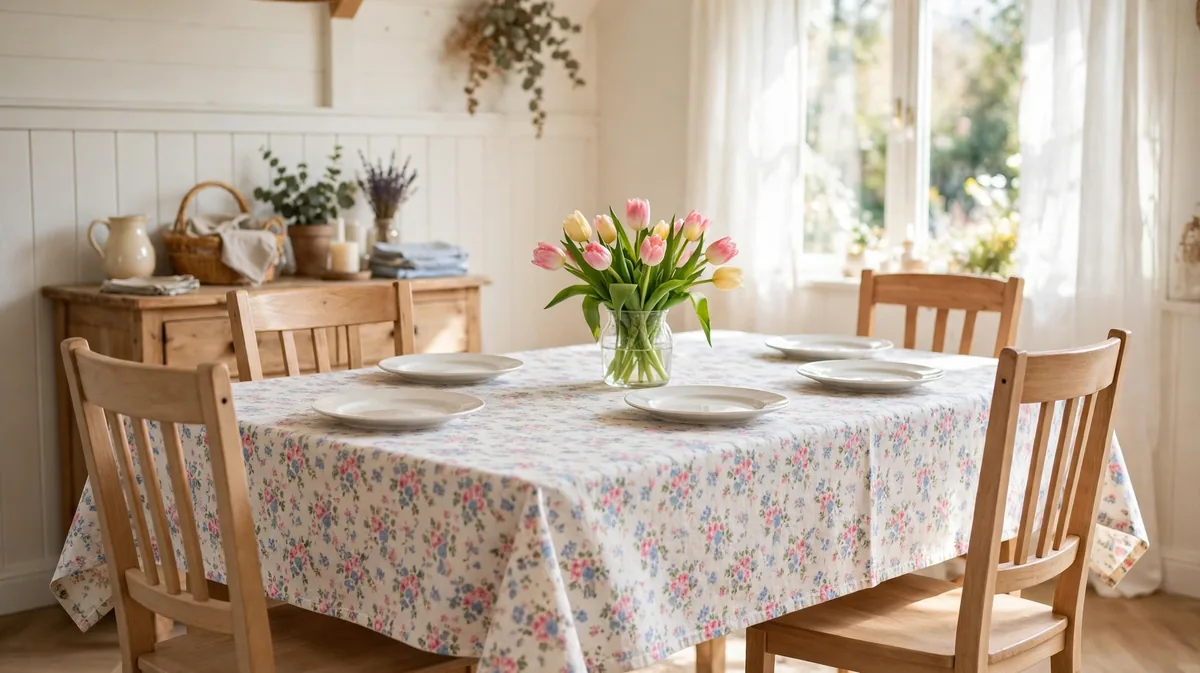
Floral tablecloths bring a decorative touch to dining spaces without requiring many additional accessories. Small botanical prints can look delicate and traditional, while larger floral patterns create a stronger visual statement.
For a balanced arrangement, pick one or two colors from the fabric and repeat them in your napkins or centerpiece. If the tablecloth already has a busy print, choose plain dinnerware and avoid adding another prominent pattern.
Soft floral designs work beautifully in cottage-inspired dining rooms, while darker botanical prints can complement more dramatic interiors.
5. Create a Modern Dining Table Look with Solid Colors
Modern dining table cover ideas often focus on clean lines, simple patterns, and carefully chosen colors. Rather than using heavily decorated fabric, select a tablecloth with a smooth finish or subtle texture.
Consider these combinations:
- Charcoal with light gray accessories for a contemporary look.
- Warm beige with black accents for understated contrast.
- Olive green with natural wood for an organic feel.
- Navy blue with white dinnerware for a crisp appearance.
- Soft gray with brushed-metal accessories for a refined setting.
The surrounding furniture matters too. A simple tablecloth often looks more intentional when its color connects with the dining chairs, lighting, or other elements in the room.
6. Decorate with a Checkered Tablecloth
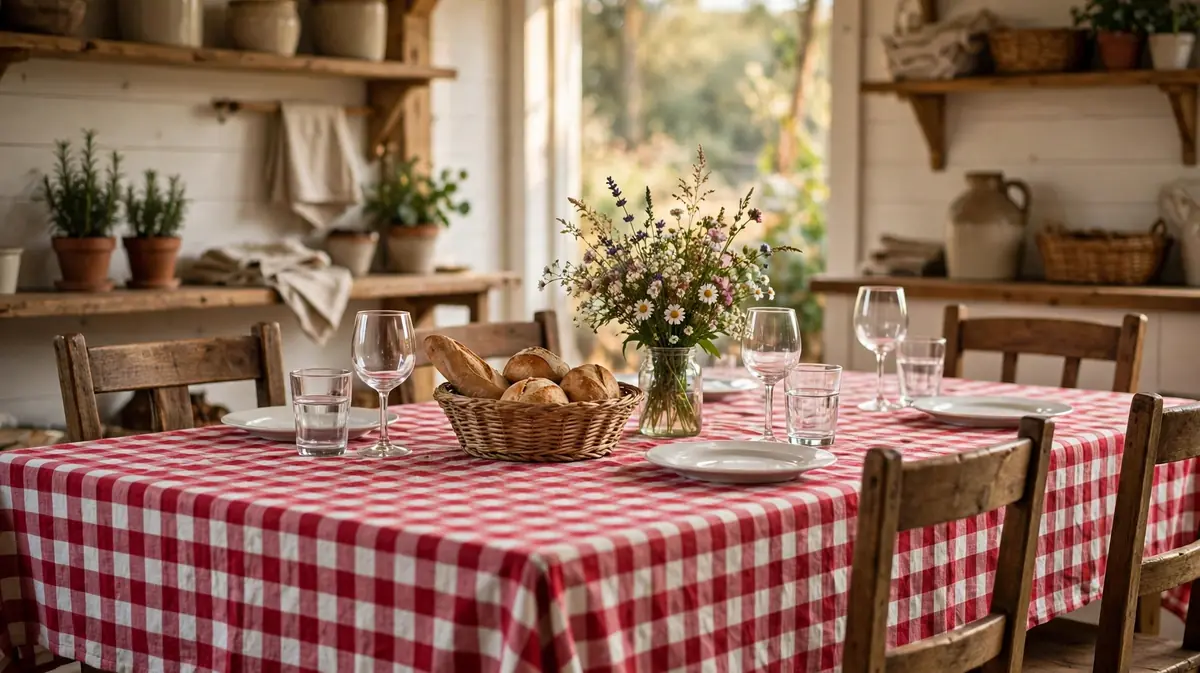
Checkered fabric can make a dining table feel welcoming and relaxed. It is a natural choice for farmhouse kitchens, cottage interiors, and casual family dining areas.
Red and white checks create a traditional country-inspired look. Black and white patterns feel more graphic, while muted green or beige checks offer a softer alternative.
Pair the fabric with plain plates, simple glassware, and a small arrangement of flowers. You can also use a checkered tablecloth for outdoor lunches or informal weekend gatherings.
This relaxed look also pairs well with the rustic home decor ideas used in the rest of a farmhouse style room, such as natural wood, woven textures and warm colors.
7. Use a Textured Linen Tablecloth
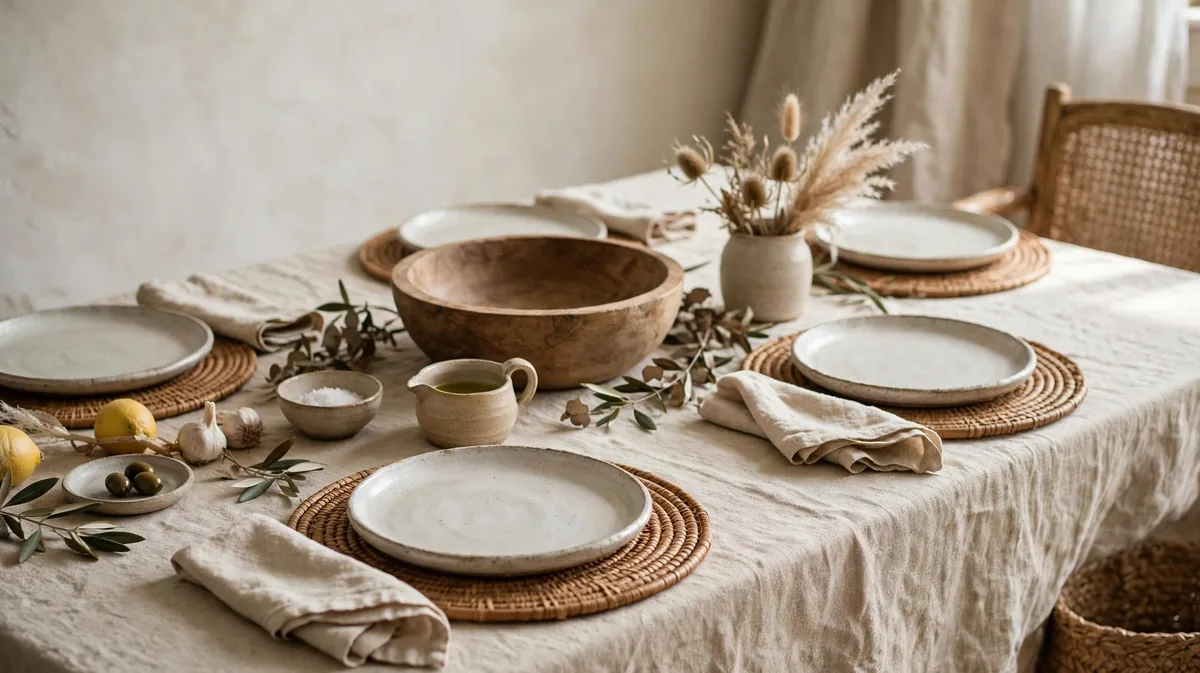
Linen is popular in dining decor because its natural texture adds character without needing a complicated pattern. Its slightly relaxed appearance can make even a simple table setting feel thoughtfully arranged.
Choose natural linen shades for a warm, organic look. Add cotton napkins, handmade ceramic dishes, or woven placemats to introduce complementary textures.
Linen does wrinkle more easily than some other fabrics, but those natural creases are part of its relaxed appearance. If you prefer a smoother finish, look for a suitable linen blend.
8. Add a Decorative Tablecloth Border
A decorative border can turn an ordinary tablecloth into something more distinctive. You can use lace, contrasting fabric, embroidery, or a narrow strip of patterned material around the edges.
For example, a plain white tablecloth with a small lace border suits traditional and romantic interiors. A dark fabric border around a beige cloth creates a more modern contrast.
This is also a useful way to update an older tablecloth. Instead of buying a completely new one, add a border that matches your current dining room decor.
9. Bring Fresh Flowers to the Center of the Table
Flowers and tablecloths work beautifully together because the fabric creates a background for the colors and shapes of the arrangement.
For a small dining table, one compact vase may be enough. A longer rectangular table can accommodate a few smaller arrangements spaced along the middle.
Choose flowers that complement rather than compete with your tablecloth. White flowers look lovely against darker fabrics, while colorful blooms can brighten a neutral covering.
If you want a centerpiece that lasts longer, use dried flowers or seasonal branches.
10. Decorate with Wooden and Woven Accessories
Wood and woven materials add warmth to a dining table, particularly when the tablecloth has a smooth or plain finish.
Try adding round wooden chargers, rattan placemats, a woven bread basket, or a small decorative tray. These pieces introduce a different texture and help prevent a neutral table setting from looking flat.
This combination works especially well with beige, cream, white, and muted green tablecloths.
11. Use a Tablecloth with Scalloped Edges
Scalloped edges add a decorative finish without requiring a busy print. The curved border gives the fabric a softer appearance and can make a simple table setting feel more special.
A white scalloped tablecloth looks elegant in a traditional dining room. Pastel versions can suit cottage-style interiors, while a subtle contrasting edge can give the design a more contemporary feel.
If you enjoy sewing, scalloped edging can also be added to a plain fabric tablecloth as a DIY project.
12. Try a Two-Color Tablecloth Arrangement
Combining two colors can make your table look more interesting without introducing complicated patterns.
Start with one main tablecloth, then add a second fabric as a runner or decorative overlay. A white base with a terracotta runner feels warm and inviting. Beige paired with forest green creates an earthy combination, while navy and ivory offer a timeless contrast.
For the best result, repeat one of the colors in your napkins, flowers, or dinnerware. This creates a visual connection between the different elements.
13. Style a Round Dining Table with a Beautiful Tablecloth
Round tables have a different shape from rectangular dining tables, so the fabric should complement their proportions.
A properly sized round tablecloth creates an even drop around the edges. Choose a plain fabric for a clean appearance or a small repeating pattern if you want a little more detail.
A single centerpiece usually works best. Try a ceramic vase, a low fruit bowl, or a small arrangement of candles. Avoid oversized decorations that take up too much space.
14. Use a Floor-Length Tablecloth for Special Occasions
A floor-length tablecloth can give a dining table a formal appearance. It is particularly useful for holiday dinners, celebrations, and special gatherings.
Choose a fabric that hangs evenly around the table. Ivory, white, champagne, and deep green are attractive choices for formal settings.
Complete the arrangement with coordinated napkins, elegant dinnerware, and a low centerpiece. Make sure the hanging fabric does not interfere with chairs or create a tripping hazard.
15. Make a DIY Painted Tablecloth
If you enjoy handmade decor, fabric painting is a creative way to personalize a plain tablecloth. You can add small botanical illustrations, simple geometric shapes, or a repeating pattern along the edges.
Begin with a washable fabric suitable for the paint you plan to use. Sketch your design lightly before applying color, and test the paint on an inconspicuous piece of fabric first.
You do not need to cover the entire tablecloth with artwork. A painted border, small corner illustrations, or a subtle design down the center can be enough to give it a custom appearance.
Always follow the paint manufacturer’s instructions for drying, washing, and heat-setting.
16. Add Embroidered Details to a Tablecloth
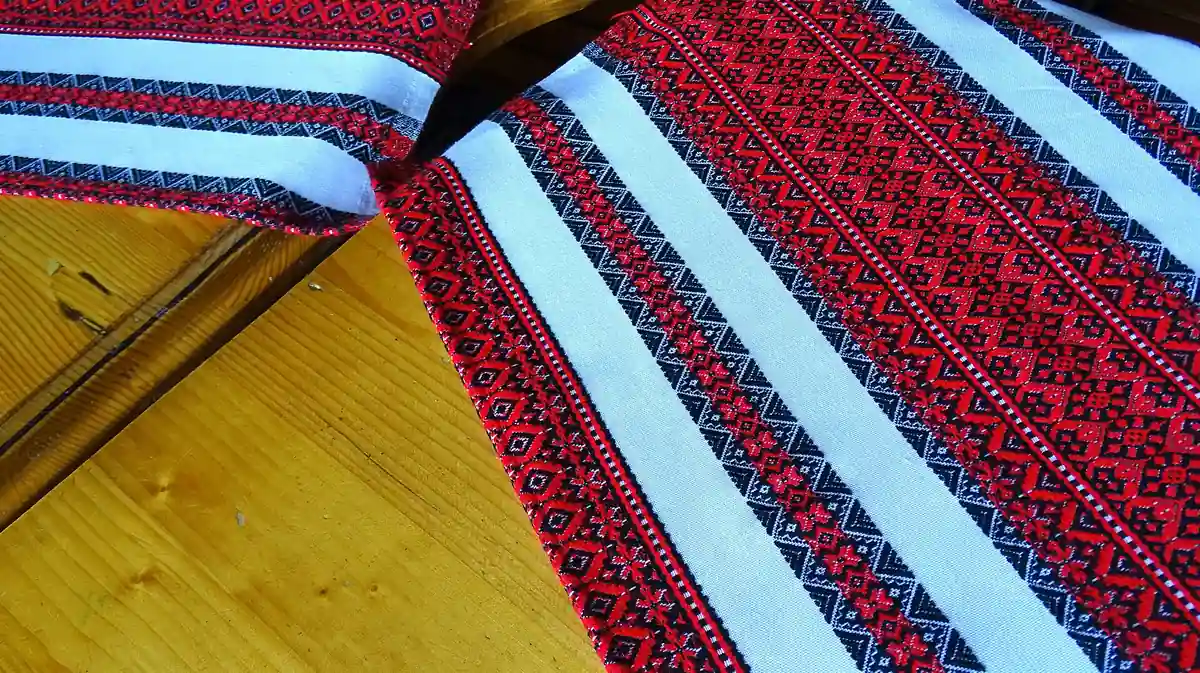
Embroidery can make a tablecloth feel personal and distinctive. Small stitched flowers, leaves, initials, or geometric details can add decoration without overwhelming the fabric.
If you are making your own design, start with a plain cotton or linen tablecloth. Choose embroidery thread that contrasts gently with the base color.
You could stitch a small motif in each corner, create a decorative border, or add initials for a special occasion. Handmade embroidery also makes a thoughtful gift for someone who enjoys home decor.
How to Choose the Right Tablecloth for Your Home
A beautiful design is only part of the decision. The right tablecloth should fit your furniture, suit your lifestyle, and be easy enough to maintain.
Measure your table: Record its length, width, or diameter before purchasing fabric. Decide how much material you want hanging over each side.
Consider the fabric: Cotton is a practical option for everyday meals. Linen offers natural texture, while polyester blends are often easier to care for. Delicate fabrics are better suited to occasional use.
Think about the room: Look at your dining chairs, flooring, wall colors, and existing decorations. Choose a tablecloth that connects with the overall interior rather than introducing too many competing colors. The walls play a part too, and dining room wall decor ideas that share a color with your tablecloth can make the whole space feel connected.
Choose a suitable pattern: Small patterns can work well in compact dining areas, while larger prints may suit spacious tables. If your room already has patterned furniture, a plain tablecloth may create better balance.
Check the care instructions: Consider how often you will wash the fabric and whether it needs ironing. A beautiful tablecloth is more useful when you can comfortably maintain it.
Simple Ways to Keep Your Tablecloth Looking Fresh
Table linens can collect food stains, spills, dust, and everyday marks. A little care helps keep them ready for the next meal.
- Treat spills promptly using a cleaning method suitable for the fabric.
- Check washing instructions before cleaning embroidered or delicate tablecloths.
- Avoid mixing heavily colored fabrics with white linens during washing.
- Dry tablecloths completely before folding and storing them.
- Store seasonal tablecloths in a clean, dry place.
- Remove wrinkles using an iron or steamer only when the fabric care label allows it.
For daily dining, having two or three practical tablecloths makes it easier to switch coverings while one is being washed.
Make Your Dining Table Feel Like Part of Your Home
A tablecloth is more than a protective covering. It can introduce a new color, soften a room, highlight your favorite dinnerware, or give a special gathering its own atmosphere.
You might prefer a simple linen cloth with fresh flowers, a handmade embroidered design, or a modern solid-color covering with clean accessories. There is no single decorating formula that works for every home.
Start with the fabric and style you genuinely enjoy, then add only the details that make the table more inviting. The result should look beautiful while remaining comfortable and practical for the way you live.
Frequently Asked Questions
How can I decorate a tablecloth simply?
Choose a plain tablecloth, add a small centerpiece, and coordinate your napkins with one or two colors in the room. A simple runner or woven placemats can provide extra detail without overcrowding the table.
What are some easy DIY tablecloth ideas?
You can personalize a plain tablecloth with fabric paint, embroidered flowers, lace borders, decorative stitching, tassels, or fabric trim. Always check that your materials are suitable for the fabric and its washing requirements.
How do I make a dining table look modern?
Use a solid-color tablecloth, subtle texture, and simple accessories. Neutral shades, geometric patterns, clean-lined dinnerware, and a restrained centerpiece can create a contemporary dining arrangement.
What is the best fabric for a dining tablecloth?
Cotton is a practical everyday choice because it is comfortable and generally easy to wash. Linen offers a natural, relaxed appearance, while polyester blends can be useful when low-maintenance care is important.
Should a tablecloth match the dining room?
It does not need to match every item exactly. Choose a color or pattern that complements your dining chairs, walls, flooring, or curtains. Repeating one or two colors creates a coordinated look.
How can I decorate a small dining table?
Use a correctly sized tablecloth, a small centerpiece, and simple place settings. Avoid bulky decorations and excessive fabric layers that take away usable dining space.
Can I use a curtain as a tablecloth?
Yes, provided the curtain fabric is clean, suitable for contact with dining surfaces, and easy to wash. Measure the table, finish any unfinished edges, and avoid fabrics with unsuitable coatings or treatments.
How do I make an old tablecloth look new?
Wash it according to its care label, remove wrinkles safely, and consider adding a new border, embroidery, fabric trim, or a contrasting runner. A fresh centerpiece can also change the overall appearance.

Ryan West is an interior design consultant and home styling expert with an eye for modern aesthetics. From transforming cramped kitchens into culinary havens to mastering the art of minimalist home decor, Ryan shares actionable tips to help you create a space that feels like luxury, no matter your budget.