

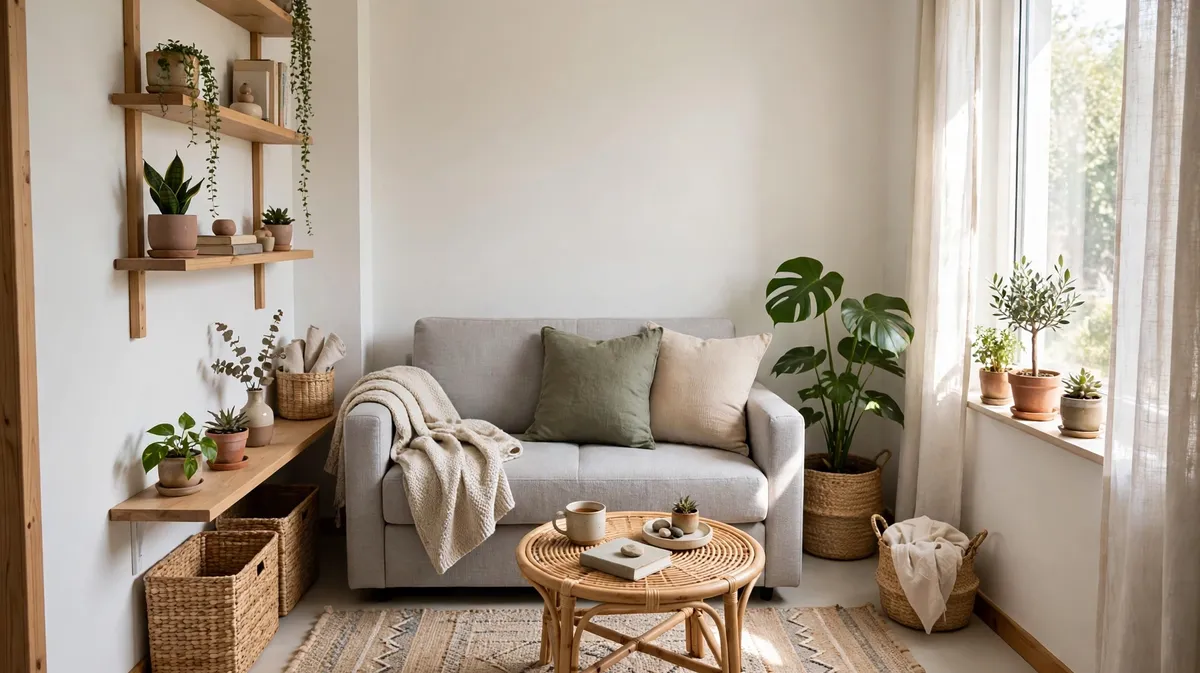
A small living room can be just as comfortable, stylish, and inviting as a much larger space. The secret is making thoughtful choices about furniture, colors, lighting, storage, and layout. When every item has a purpose, even a compact room can feel open and beautifully organized.
The challenge is finding the right balance. Oversized furniture can make the room feel crowded, while too many small decorations can create visual clutter. Limited wall space, awkward corners, and shared dining areas can also make decorating more complicated.
Fortunately, you do not need a complete renovation to improve your space. A better furniture arrangement, a well-placed mirror, clever storage, or a fresh color scheme can make a noticeable difference.
These brilliant small living room ideas will help you use your available space wisely while creating a room that reflects your personal style. Whether you live in a small apartment, have a narrow living area, or share your lounge with a dining space, there are practical ways to make it work.
1. Choose Furniture That Fits Your Room
Furniture size has a major impact on how spacious a small living room feels. A large sofa or bulky armchair can take up valuable floor space and make it difficult to move around comfortably.
Start by measuring your room before purchasing anything. Consider the sofa’s width and depth, the distance between furniture pieces, and the space needed to open doors or walk through the room.
Look for furniture with a compact profile, raised legs, or open sides. These details allow more of the floor to remain visible, making the room feel less crowded.
You do not have to choose the smallest furniture available. A comfortable sofa with suitable proportions is often more useful than several tiny seats that do not provide enough room for relaxing.
2. Use Mirrors to Create a More Open Feeling
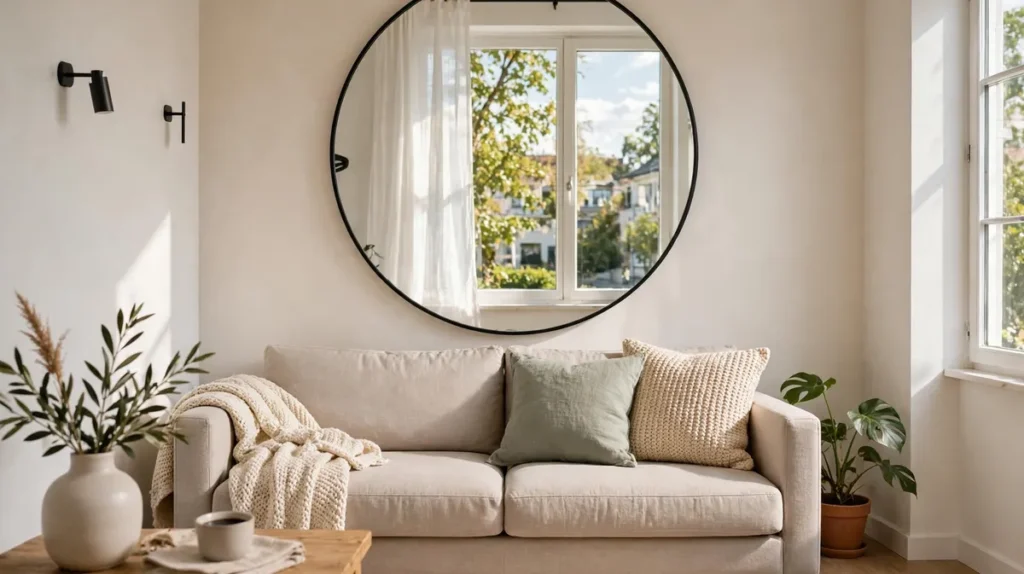
Mirrors are one of the easiest ways to make a small living room feel brighter and more spacious. They reflect natural and artificial light, adding depth to areas that might otherwise feel dark or enclosed.
A large mirror above a sofa or console table can become an attractive focal point. You can also place a tall mirror opposite a window to reflect outdoor light into the room.
For a modern interior, choose a simple frameless mirror or one with a slim black border. A decorative wooden or brass frame can bring warmth to a traditional living room.
Placement matters more than quantity. One well-positioned mirror often creates a better effect than several small mirrors scattered around the walls.
If you want more ways to use mirrors as a design feature, these wall mirror decor ideas show how a single statement mirror can open up a compact room.
3. Try a Light and Consistent Color Palette
Color can influence how large or small a living room appears. Light shades reflect more light and can make walls feel less visually heavy.
Consider using warm white, soft beige, pale gray, muted cream, or light sage as your main colors. These shades create a calm background that works with different furniture styles.
You do not need to make everything white. Add personality through cushions, artwork, rugs, and decorative accessories. A few darker accents can provide contrast without overwhelming the space.
Another useful approach is to keep the walls, curtains, and larger furniture pieces within a similar color family. This creates visual continuity and makes the room feel more connected.
4. Make the Most of Vertical Wall Space
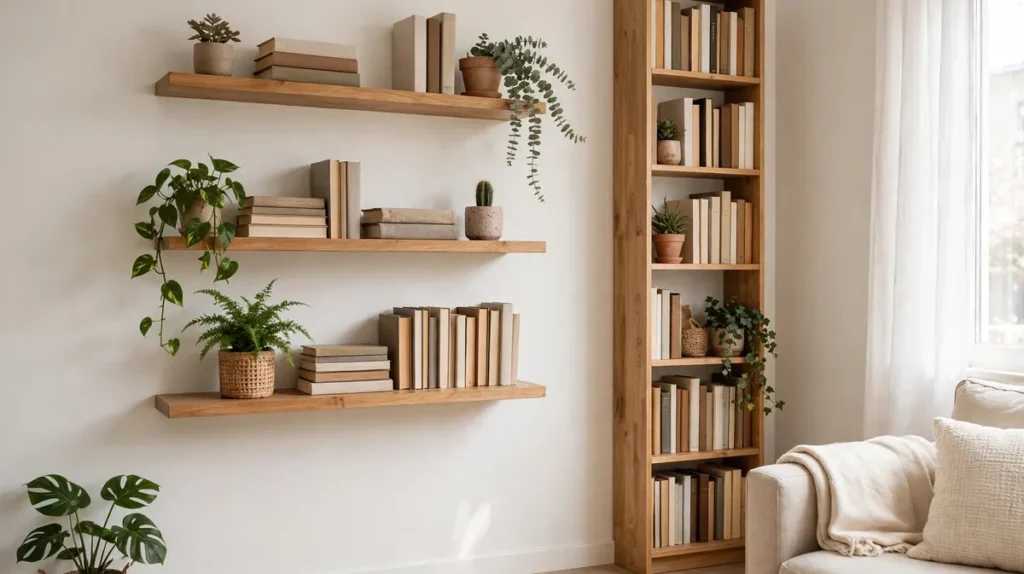
When floor space is limited, look upward. Vertical storage helps keep everyday belongings organized without taking up additional room.
Floating shelves can hold books, small plants, framed photographs, and decorative objects. Tall bookcases provide storage while using a relatively small floor footprint.
You can also install wall-mounted cabinets or narrow shelving above a desk or console. Keep heavier everyday items within comfortable reach and use higher shelves for objects you do not need frequently.
Avoid filling every wall with shelves. Leave some open space so the room does not feel crowded from floor to ceiling.
5. Select a Sofa With Built-In Storage
A sofa with hidden storage can be particularly useful in a compact living room. Some designs include lift-up seats, storage compartments, or pull-out sections that provide extra space for household items.
You can use these compartments for spare cushions, blankets, board games, or seasonal accessories. Keeping these belongings out of sight makes it easier to maintain a tidy room.
If you are shopping for a new sofa, check how much storage it offers and whether the compartments are easy to access. A practical design should support your daily routine rather than create another inconvenience.
For an existing sofa, consider adding a storage ottoman. It can serve as a footrest, extra seating, and a place to keep small items.
6. Choose a Coffee Table That Does More Than One Job
A traditional coffee table can take up considerable floor space, especially when the room is already filled with seating. A multifunctional design can make that area more useful.
Consider a nesting table set, a storage coffee table, or an upholstered ottoman with a removable tray. These options provide a surface for drinks and books while offering additional flexibility.
Nesting tables are especially convenient because smaller tables can slide underneath the larger one when they are not needed.
Transparent acrylic or glass tables can also work well. Their visually lightweight appearance allows the room to feel more open while still providing a practical surface.
7. Arrange Seating to Encourage Conversation
The way you position seating can change how comfortable and functional a living room feels. Pushing every piece of furniture against the walls is not always the best solution.
In a small square room, try placing a sofa against one wall and positioning a compact chair opposite it. A small side table can complete the arrangement without blocking movement.
For a narrow living room, place the main sofa along the longer wall and keep additional seating lightweight. Avoid creating unnecessary obstacles between the entrance and the rest of the room.
If you regularly entertain guests, arrange seats so people can comfortably talk to one another. A practical layout should support everyday activities rather than simply look attractive in photographs.
8. Hang Curtains Higher to Emphasize Ceiling Height
Curtains can make a noticeable difference in a small living room. Hanging the curtain rod closer to the ceiling rather than directly above the window creates the impression of taller walls.
Choose curtains that extend toward the floor for a clean, elongated appearance. Lightweight fabrics such as linen or sheer materials allow daylight to pass through while providing some privacy.
For a calm interior, select curtains that coordinate with the wall color. If you prefer a little contrast, use a subtle pattern or a slightly deeper shade.
Avoid heavy, overly layered window treatments if the room receives limited natural light. A simple curtain arrangement often works better in compact spaces.
9. Use a Rug to Define the Living Area
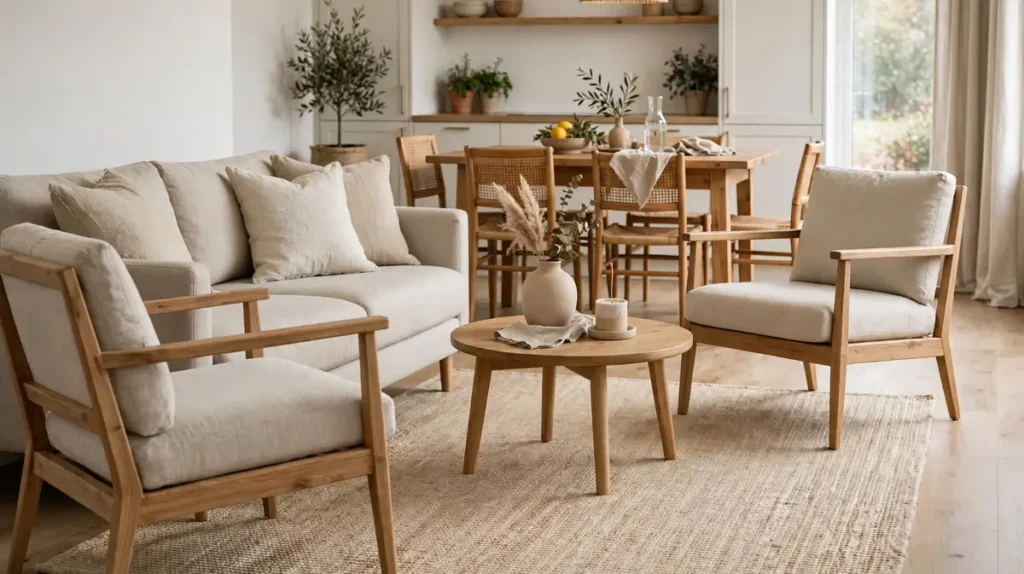
A rug can help organize a small living room, particularly when it shares space with a dining area or kitchen.
Choose a rug that is large enough to connect the main seating pieces. Ideally, the front legs of the sofa and chairs should rest on it, creating a more unified arrangement.
A rug that is too small can make the furniture look disconnected. On the other hand, an appropriately sized design helps establish the living area without requiring physical dividers.
Neutral rugs work well in rooms with colorful furniture, while a patterned rug can add interest to a simple interior. Consider a low-pile design if you want something easier to maintain.
10. Mount the TV on the Wall
A television stand can occupy valuable floor space. Wall-mounting the TV is a practical alternative that creates a cleaner appearance and leaves more room underneath.
You can install a slim floating shelf below the screen for a streaming device or a few small accessories. Cable management is important because visible wires can make an otherwise tidy wall look messy.
Before mounting the television, consider viewing distance, screen height, seating position, and glare from nearby windows.
If you prefer a traditional setup, choose a narrow media console with drawers or concealed compartments. This provides storage without dominating the room.
11. Create a Defined Area in an Open-Plan Room
A small living room may share space with a kitchen, dining area, or workspace. Without a clear arrangement, the entire space can feel disorganized.
You can define separate zones without building walls. Use a rug to identify the seating area, a dining table to establish the eating space, and consistent lighting to distinguish different activities.
Furniture placement can also create natural boundaries. For example, the back of a sofa can separate the lounge from a dining area while keeping the room visually open.
Try to maintain clear walking paths between each zone. The goal is to make the space feel organized without restricting movement.
For more layout inspiration, these apartment living room decor ideas show practical arrangements that actually work in small spaces.
12. Add Personality With a Statement Wall
A small room does not have to be completely neutral. A carefully designed statement wall can bring character without overwhelming the entire space.
Consider painting one wall in a deeper shade, adding subtle wallpaper, or displaying a large piece of artwork above the sofa.
For a warm and relaxed interior, earthy green, muted terracotta, or dusty blue can create an attractive focal point. If you prefer a minimalist look, textured paint or simple decorative paneling may be enough.
Keep the remaining walls relatively simple so the statement feature has room to stand out.
13. Bring in Plants Without Cluttering the Floor
Indoor plants add color, texture, and a natural feeling to a living room. However, too many large pots can make a small space difficult to navigate.
Instead of placing several plants on the floor, use vertical and compact arrangements. A small plant on a shelf, a hanging planter, or a narrow plant stand can introduce greenery without taking up much room.
Choose plants according to the natural light available. Pothos, snake plants, and ZZ plants are options worth considering for different indoor conditions, although their light and watering needs still matter.
A few healthy plants usually look more intentional than a large collection squeezed into every corner.
14. Make Awkward Corners Useful
Unused corners can become valuable areas in a small living room. Rather than leaving them empty or filling them with random decorations, give each corner a clear purpose.
A narrow corner can accommodate a reading chair, a slim floor lamp, or a compact bookshelf. If you work from home, a small desk with wall-mounted shelving can create a practical workspace.
You can also use a corner cabinet to store books, games, or household accessories.
Measure the available space carefully before buying furniture. Pieces with rounded edges or a compact footprint can be easier to fit into tight areas.
15. Use Layered Lighting Instead of One Bright Ceiling Light
Lighting affects both the appearance and comfort of a small living room. Depending on a single overhead fixture can leave some areas looking flat or poorly illuminated.
A better approach is to combine different types of lighting. Use ceiling lights for general illumination, a floor lamp beside the sofa for reading, and a table lamp for a softer atmosphere.
Wall-mounted lights are another useful option because they do not require additional floor space.
Warm lighting can make the room feel welcoming in the evening. If possible, use dimmable bulbs so you can adjust the brightness for relaxing, entertaining, or reading.
Layered lighting also pairs well with LED room decor ideas that add a soft glow without taking up floor space.
16. Keep Decorations Simple but Meaningful
Small living rooms can quickly become cluttered when every available surface is filled with accessories. Decorative objects should add personality without making the room difficult to use.
Choose a few meaningful pieces, such as a favorite artwork, a decorative vase, a small collection of books, or a special family photograph.
Group smaller objects together rather than spreading them across every shelf and table. Varying their heights can create an attractive arrangement while keeping the display organized.
You can also rotate seasonal decorations instead of displaying everything throughout the year. This keeps the room fresh without requiring extra storage.
How to Arrange a Small Living Room for Better Functionality
Decorating becomes easier when you understand how the room is used. Before moving furniture, identify the main purpose of the space. Your layout may need to support family gatherings, watching television, reading, working, or a combination of activities.
Start with the largest piece of furniture, usually the sofa. Position it where it provides comfortable seating without blocking doors, windows, or natural walking paths.
Next, add the television, chairs, coffee table, and storage. Leave enough space to move comfortably between the main pieces. Avoid forcing furniture into a layout simply because it looks symmetrical.
For a rectangular living room, placing the sofa along the longest wall can help preserve an open central area. In a square room, a balanced seating arrangement may work better.
If the living room is part of an open-plan space, use rugs and furniture placement to establish separate zones.
Common Small Living Room Decorating Mistakes to Avoid
Even attractive furniture and accessories can make a compact room feel uncomfortable when they are not used thoughtfully.
- Buying furniture before measuring: Always check dimensions and walking clearance before making a purchase.
- Using too many small accessories: Too many decorative objects create visual clutter. Choose a few pieces that make a meaningful contribution.
- Blocking natural light: Avoid placing bulky furniture in front of windows when another arrangement is possible.
- Choosing a rug that is too small: A tiny rug can make the seating arrangement look disconnected.
- Ignoring storage: Without practical storage, everyday items can quickly take over the room.
- Following trends without considering your needs: Choose furniture and decor that support your lifestyle, not just current design trends.
Frequently Asked Questions
How can I make a small living room look bigger?
Use light colors, mirrors, appropriately sized furniture, and layered lighting. Keeping walking paths clear and reducing unnecessary decorations can also make the room feel more open.
What is the best furniture layout for a small living room?
The best layout depends on the room’s shape and main activities. Place the sofa where it provides comfortable seating without blocking movement, then arrange additional furniture around it.
What colors work best in a small living room?
Warm white, cream, beige, pale gray, and soft pastel shades can make a room feel brighter. You can introduce darker colors through cushions, artwork, and smaller decorative accents.
How do you decorate a small living room on a budget?
Rearrange existing furniture, update cushion covers, add affordable artwork, use floating shelves, and improve lighting. Small changes can refresh a room without requiring expensive furniture.
Where should a TV go in a small living room?
A wall-mounted TV can save floor space and create a clean appearance. Position it at a comfortable viewing height and avoid placing it where windows create distracting glare.
How do you fit a dining table into a small living room?
Choose a compact round or extendable table and position it near the kitchen or dining area. Use furniture placement and a rug to distinguish the dining zone from the seating area.
Should a small living room have a large sofa?
A large sofa can work if its proportions suit the room and there is enough space to move around it. Measure carefully and avoid adding too many other bulky pieces.
Make Your Small Living Room Feel Like Home
A limited amount of space does not mean you have to compromise on comfort or style. The right combination of furniture, storage, lighting, and thoughtful decoration can make a small living room feel welcoming and practical.
Start by identifying what your room needs most. You might benefit from better seating, more storage, improved lighting, or a layout that makes everyday movement easier.
You do not have to change everything at once. A few well-planned improvements can transform how the room looks and functions while helping you create a space that feels genuinely yours.

Ryan West is an interior design consultant and home styling expert with an eye for modern aesthetics. From transforming cramped kitchens into culinary havens to mastering the art of minimalist home decor, Ryan shares actionable tips to help you create a space that feels like luxury, no matter your budget.