

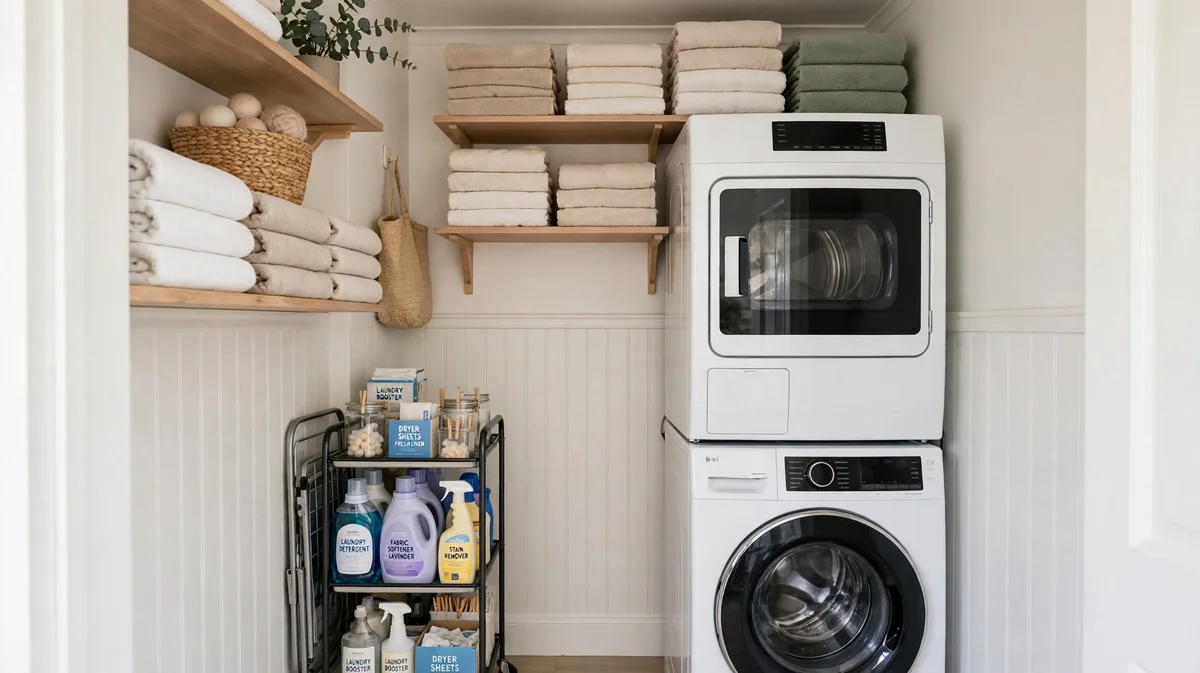
A small laundry closet can become crowded surprisingly quickly. Detergent bottles, fabric softener, laundry baskets, cleaning supplies, and spare towels all need a place, but stacked washers and dryers leave very little room for traditional storage.
The solution is not to squeeze more shelves into every available space. It is to use the space you already have without blocking appliance doors, ventilation, hoses, or access for maintenance.
Whether your laundry closet is tucked into a hallway, hidden behind folding doors, or part of a small apartment, a few thoughtful changes can make it easier to use every day.
Here are nine practical small laundry closet organization ideas for stacked washer and dryer setups, including options for renters and homes with limited storage.
Measure Your Laundry Closet Before Adding Storage
Before buying baskets, shelves, or organizers, take a few measurements. A storage item that looks perfect online may be too deep for your closet or interfere with opening the washer and dryer doors.
Measure these areas first:
- Closet width: Check the available space beside the stacked appliances.
- Closet depth: Measure how much room remains in front of the machines.
- Available height: Look for usable wall space above the appliances.
- Door clearance: Make sure closet doors can open without hitting baskets or shelves.
- Appliance access: Leave enough room to reach controls, filters, connections, and service areas.
Also check the installation instructions for your particular washer and dryer. Required clearances vary by model, especially around dryer ventilation and heat-producing components.
A useful approach is to sketch the closet on paper and mark the appliance footprint before choosing storage solutions.
9 Small Laundry Closet Organization Ideas for Stacked Washer and Dryer
1. Use a Slim Storage Cart Beside the Machines
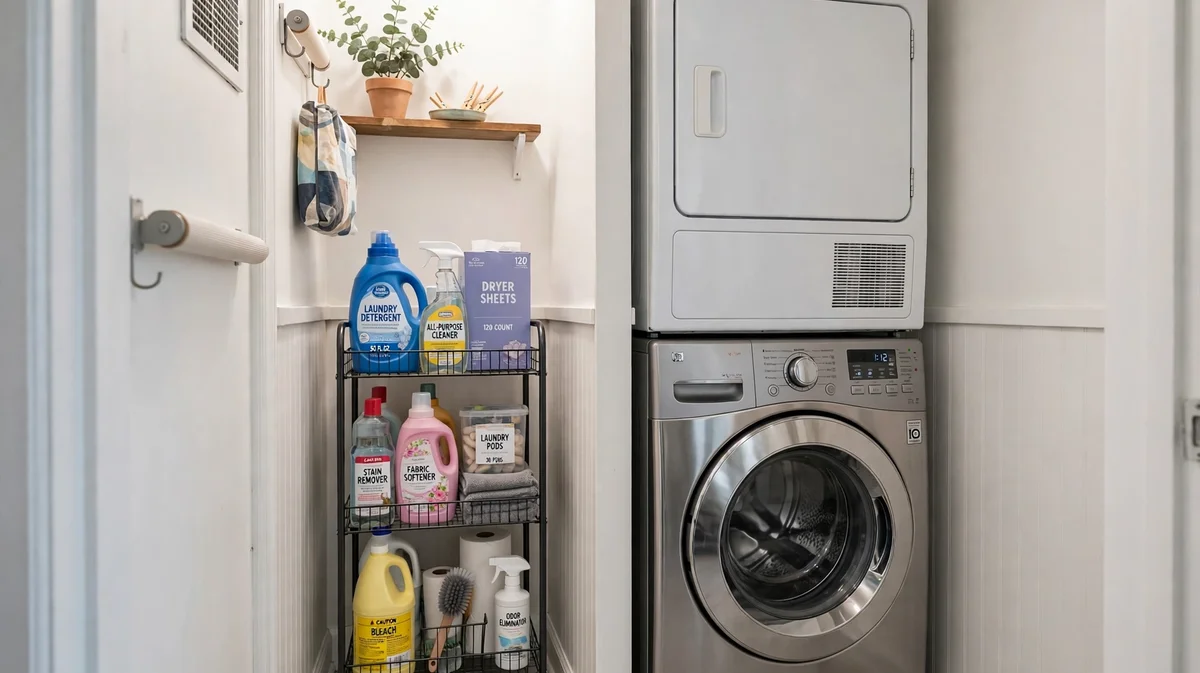
A narrow storage cart can make use of a small gap that would otherwise remain empty. It is particularly useful for laundry products you reach for regularly.
Choose a cart with several levels so you can separate detergent, stain remover, dryer sheets, and small cleaning supplies.
For example, the top shelf could hold everyday detergent, the middle shelf could store stain-treatment products, and the bottom shelf could hold extra supplies.
Before purchasing one, measure the actual gap rather than relying on the advertised width. Check that the cart can move without catching on appliance hoses or other connections.
If there is no safe clearance beside the machines, use a nearby shelf or another storage area instead.
2. Add Shallow Shelves for Everyday Supplies
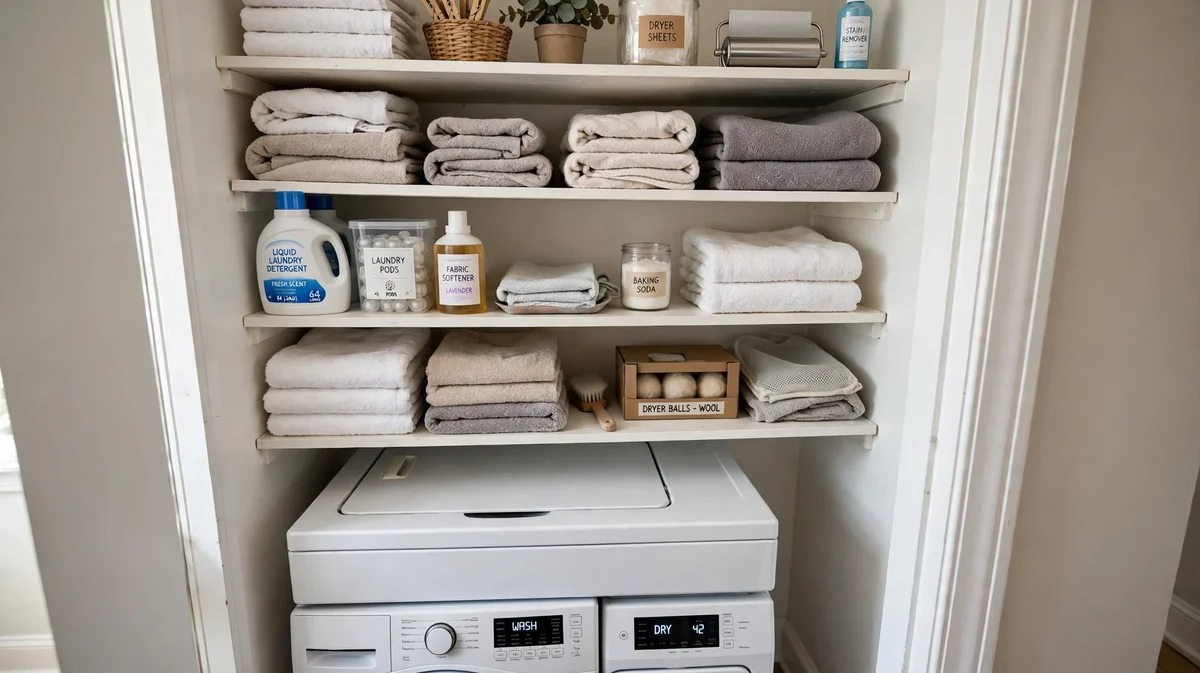
When floor space is limited, vertical storage can make a big difference.
A shallow shelf can provide a home for small detergent containers, laundry accessories, and folded cleaning cloths. It can also prevent products from collecting on top of the washer or dryer.
For a stacked appliance setup, think carefully about shelf placement. Avoid blocking controls, ventilation, service panels, or access required by the appliance manufacturer.
A practical arrangement is to keep frequently used products on an easy-to-reach shelf and less frequently used supplies in a separate cupboard.
You do not need deep shelves for every item. Smaller shelves can be easier to keep tidy because they discourage unnecessary storage.
3. Use the Inside of the Closet Door
The inside of a laundry closet door can provide useful storage without taking up floor space.
A suitable over-door organizer may hold lightweight items such as:
- Dryer sheets
- Mesh laundry bags
- Small cleaning cloths
- Lint-removal tools
- Spare laundry accessories
Choose an organizer that does not interfere with the door closing or the operation of the appliances.
Avoid placing heavy bottles or bulky items on a door organizer unless it is specifically designed and rated for that weight.
This idea is especially useful in apartments where adding permanent shelves may not be permitted.
4. Create a Small Detergent Station
Laundry products become difficult to manage when they are spread across several shelves and baskets.
A dedicated detergent station gives every frequently used product a consistent place.
Use a small tray or washable container to group your everyday supplies. You might keep detergent, stain remover, and a measuring cup together.
If you have children or pets, store detergents and cleaning products in secure, appropriate storage. Laundry products should remain in their original containers when possible, with labels and safety information intact.
You can also separate everyday supplies from backup stock. This prevents extra bottles from crowding the area you use most often.
5. Choose a Narrow Laundry Hamper
A full-size laundry basket may not fit comfortably inside a small laundry closet. A slim hamper can be a better option.
Look for a design that fits your available floor space without blocking the washer door or restricting access to the machines.
Depending on your household, you could use:
- A narrow upright hamper for everyday laundry.
- A removable fabric bag for carrying clothes.
- A small divided hamper for separating light and dark clothing.
- A foldable hamper that can be stored elsewhere when not needed.
If the closet is extremely narrow, consider placing the main hamper just outside the laundry area. The closet does not need to hold every laundry-related item to be well organized.
6. Add Wall Hooks for Laundry Accessories
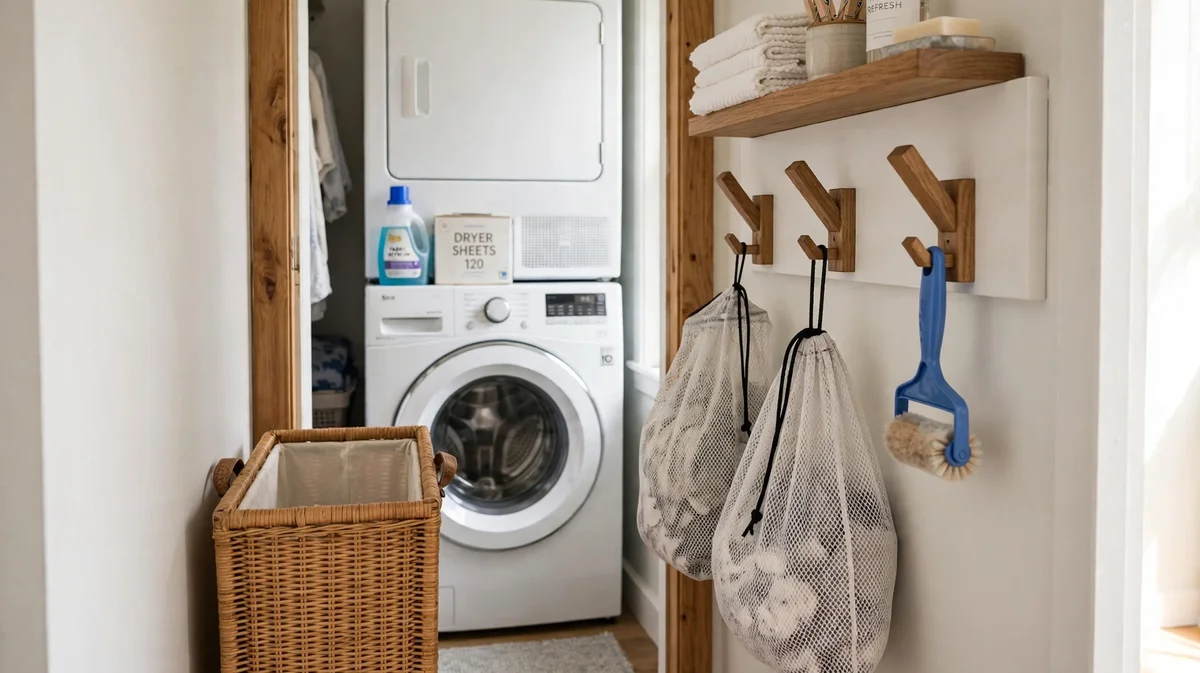
Small accessories are easy to misplace when there is no designated storage spot.
A few properly installed hooks can help organize reusable laundry bags, lint brushes, small drying accessories, and cleaning cloths.
For renters, removable hooks may be an option for lightweight items, provided the wall surface and product instructions allow them.
Avoid hanging heavy objects above appliances or placing hooks where they interfere with doors, electrical connections, or maintenance access.
The goal is to keep small accessories visible and easy to reach without filling another shelf or drawer.
7. Use Stackable Bins for Extra Supplies
If you buy detergent, cleaning cloths, or laundry accessories in larger quantities, extra supplies can quickly take over a small closet.
Stackable bins help group these items and make better use of suitable shelving.
For example:
- One bin for backup detergent.
- One bin for dryer sheets and laundry bags.
- One bin for cleaning cloths and spare accessories.
Use clear or clearly labelled containers so you can see what is inside.
Avoid stacking bins in a way that makes them difficult to remove or creates an unstable arrangement. Heavy containers should stay low, and the storage unit should be suitable for the combined weight.
8. Create a Fold-Away Drying Area
A drying rack can be useful, but a traditional floor-standing model may take up too much space in a small laundry closet.
A fold-away drying solution can be a better choice if you occasionally need to air-dry delicate clothing.
Depending on your available wall space, consider a suitable retractable drying line or folding rack installed away from appliance heat and ventilation areas.
You can also keep a compact folding drying rack outside the closet and bring it out when needed.
Check the product’s weight limits and installation instructions before using it. Do not attach a drying rack to an appliance or block the dryer exhaust.
9. Keep a Small Cleaning and Maintenance Station
A laundry closet is easier to maintain when basic cleaning tools have a designated home.
Use a small container or shelf for items such as:
- A lint brush
- Microfiber cloths
- A small cleaning brush
- A reusable cleaning cloth
- The appliance care instructions
Keep these supplies separate from laundry products and away from areas where they could obstruct appliance components.
Remember that dryer lint removal and appliance maintenance should follow the manufacturer’s instructions. A storage solution should never make routine maintenance harder.
How to Organize a Laundry Closet in a Rental
Renting does not mean you have to live with a cluttered laundry area. You can improve the space with storage solutions that do not require major changes to the property.
Start with removable or freestanding options:
- Use freestanding storage: A narrow cart or small storage unit may provide extra space without drilling into walls.
- Try removable hooks: Lightweight laundry accessories can sometimes be stored on suitable removable hooks. Follow the product’s weight and surface instructions.
- Use portable baskets: Small baskets can be moved when you need access to the machines.
- Choose adjustable organizers: Freestanding organizers may be easier to reposition than permanent shelving.
- Keep the original layout: Avoid moving appliances, altering ventilation, or changing plumbing connections without the landlord’s permission and qualified assistance where needed.
The best rental-friendly solution is one that improves daily use without creating damage or interfering with appliance safety.
What Should You Keep Out of a Small Laundry Closet?
Not everything that relates to laundry needs to stay inside the closet.
When space is limited, removing unnecessary items can be more effective than buying another organizer.
Consider storing these elsewhere:
- Large backup detergent bottles.
- Seasonal bedding and spare blankets.
- Bulk cleaning supplies.
- Clothing that needs long-term storage.
- Large ironing boards and drying racks.
- Items that have nothing to do with laundry.
If you need somewhere else to organize towels, sheets, and spare bedding, a dedicated linen closet organization guide can help you use that separate storage space more effectively.
Keeping the laundry closet focused on everyday tasks makes it easier to find what you need.
Common Laundry Closet Organization Mistakes
Even a well-intentioned organization project can create new problems if the storage layout is not planned carefully.
Blocking Appliance Ventilation
Shelves, baskets, and storage containers should never block required ventilation or dryer exhaust. Follow the appliance installation instructions and maintain the specified clearances.
Buying Organizers Before Measuring
A cart that is slightly too wide or a shelf that is too deep can make a small closet harder to use. Measure first and shop afterward.
Storing Too Many Products
Keeping several backup bottles, rarely used cleaning products, and unrelated household items inside the closet creates unnecessary clutter.
Keep only the supplies that genuinely belong in the space.
Ignoring Appliance Maintenance Access
You may need access to filters, hoses, electrical connections, and other service areas. Do not place permanent storage in front of areas that require regular inspection or maintenance.
Choosing Appearance Over Function
Matching baskets and attractive labels can make a closet look polished, but they do not automatically make it practical.
Choose storage that fits your actual routine. A simple basket that is easy to remove may be more useful than a decorative container that is difficult to reach.
How to Keep Your Laundry Closet Organized Every Week
Once the closet is organized, a short maintenance routine can help prevent clutter from returning.
Try these simple habits:
- Return detergent and accessories to their designated places after each use.
- Remove empty product containers instead of leaving them on shelves.
- Check the laundry hamper before it becomes difficult to manage.
- Wipe up spills when they happen.
- Review backup supplies and avoid buying products you already have.
- Follow the manufacturer’s instructions for lint removal and appliance maintenance.
- Recheck the storage arrangement if it begins interfering with normal appliance use.
You do not need to reorganize the entire closet every weekend. A few small habits can keep the space functional.
For a bigger home organization project, you can also use our guide on how to plan a closet organization system. The same basic planning principles can help you decide what belongs in a space and where it should go.
Frequently Asked Questions
How do you organize a small laundry closet?
Start by measuring the available space and removing items you do not use regularly. Add suitable vertical storage, a narrow hamper, labelled bins, or a slim cart where there is enough clearance. Keep appliance ventilation and maintenance access unobstructed.
What can you put beside a stacked washer and dryer?
If there is enough safe clearance, you may be able to use a slim storage cart or narrow shelving unit. Always check the appliance installation requirements and avoid blocking hoses, ventilation, controls, or service access.
How do you add storage to a laundry closet without drilling?
Freestanding carts, portable baskets, suitable over-door organizers, and removable hooks can provide additional storage. Check their weight limits and make sure they do not interfere with appliance operation.
Can you put shelves above a stacked washer and dryer?
It may be possible, depending on the appliance model, closet dimensions, installation instructions, and available clearance. The shelves must be securely installed and must not block ventilation, controls, or maintenance access.
Where should detergent go in a small laundry closet?
Keep everyday detergent in a secure, easy-to-reach location away from appliance heat and areas where it could spill onto electrical components. Store backup supplies separately and follow the product’s storage and safety instructions.
How do you make a narrow laundry closet look bigger?
Use a limited number of storage containers, keep frequently used products grouped together, and avoid filling every wall with shelves. Light colours and clear containers can also make a compact space feel less visually crowded.
Final Thoughts
A small laundry closet does not need a complicated makeover to become more useful. The biggest improvements often come from measuring carefully, choosing storage that fits the available space, and giving everyday supplies a clear home.
For stacked washer and dryer setups, the most important rule is to organize around the appliances rather than forcing the appliances to fit around your storage ideas.
Start with one improvement, such as a slim cart, a small detergent station, or a better laundry hamper. Once that works with your daily routine, add another solution if you genuinely need it.
A practical laundry closet should make washing and drying easier, not create another space you have to constantly reorganize.

Ryan West is an interior design consultant and home styling expert with an eye for modern aesthetics. From transforming cramped kitchens into culinary havens to mastering the art of minimalist home decor, Ryan shares actionable tips to help you create a space that feels like luxury, no matter your budget.