

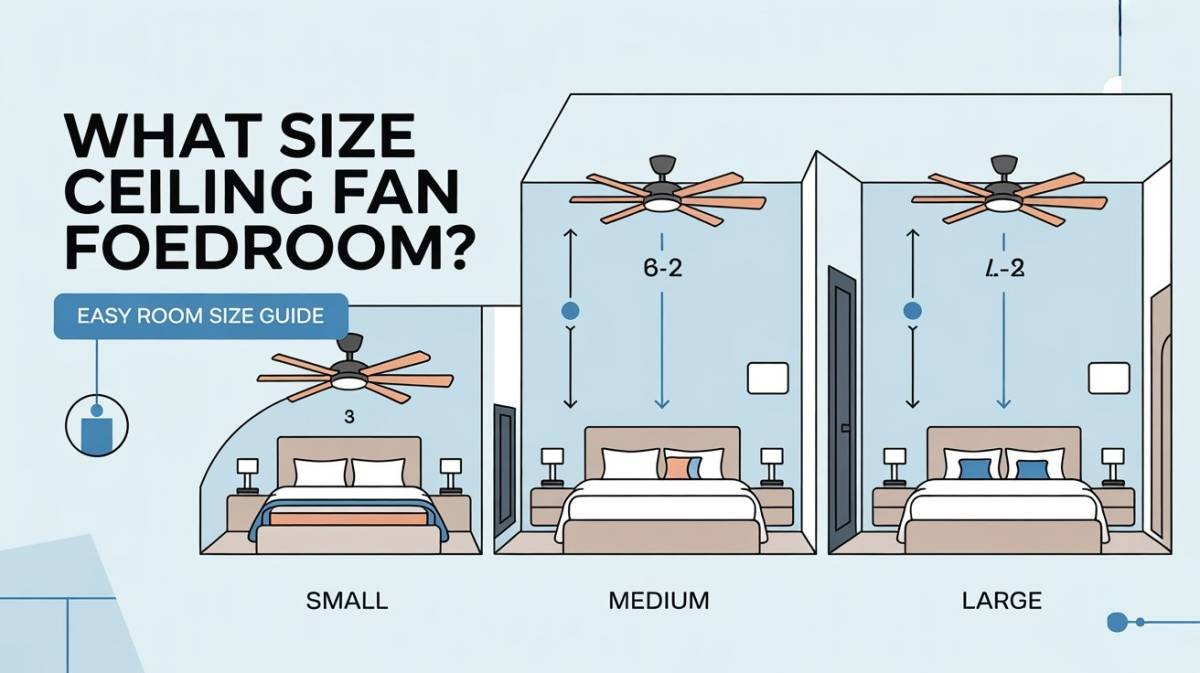
What size ceiling fan for bedroom spaces depends mostly on the room’s dimensions and airflow needs. Small bedrooms usually work best with a 42-inch fan, medium-sized rooms often need a 48-inch model, while larger master bedrooms normally feel more comfortable with a 52-inch or bigger ceiling fan.
Choosing the right size matters because a fan that feels too small may not circulate air properly, while an oversized fan can overpower the room visually and create excessive airflow. Ceiling height also plays an important role, especially in bedrooms with lower ceilings where flush-mount fans are often the safer and more comfortable option for daily use.
Why Ceiling Fan Size Matters More Than Most People Think
Many people assume any ceiling fan will work inside a bedroom as long as it looks stylish. In reality, fan sizing affects comfort, airflow, sleep quality, noise levels, and even how balanced the room feels visually.
A fan that feels too small may leave warm corners inside the bedroom, especially during summer nights. On the other hand, a fan that feels too large can create overly strong airflow directly above the bed, making the space uncomfortable instead of relaxing.
I learned this myself after replacing a small fan in a larger bedroom a few years ago. The original fan looked modern online, but once installed, the airflow barely reached the other side of the room. During warmer nights, the room still felt stuffy despite the fan running constantly. Upgrading to a larger size completely changed the comfort level almost immediately.
Bedroom Ceiling Fan Size Chart
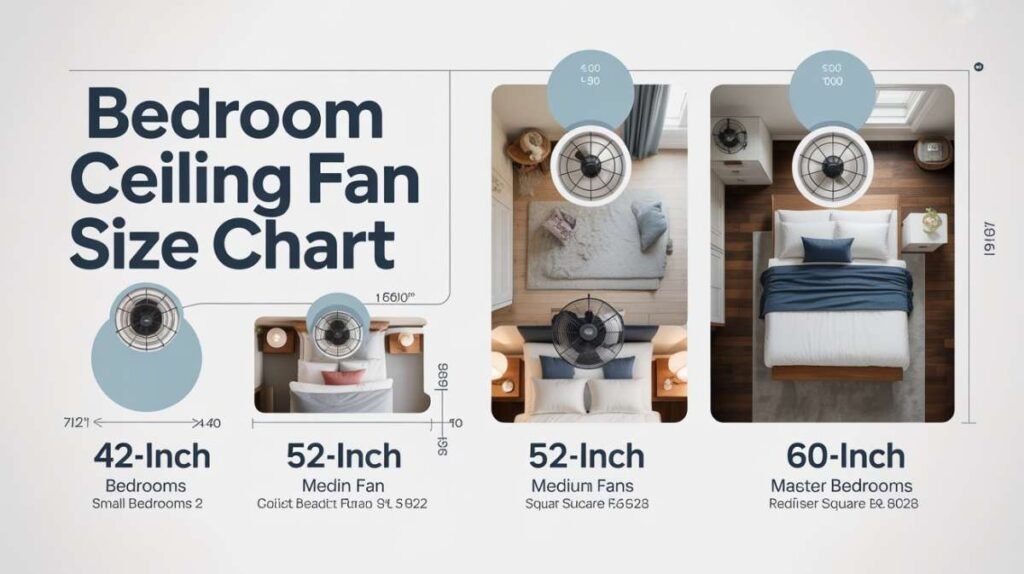
Choosing the correct ceiling fan usually becomes easier once the bedroom size is measured properly.
Small Bedrooms
Rooms up to 100 square feet normally work well with:
- 36-inch to 42-inch ceiling fans
These sizes fit comfortably without overwhelming smaller spaces.
Medium Bedrooms
Rooms between 100 and 200 square feet often need:
- 44-inch to 48-inch ceiling fans
This range works well for most standard bedrooms.
Large Bedrooms or Master Bedrooms
Rooms over 200 square feet usually feel more comfortable with:
- 52-inch to 60-inch ceiling fans
Larger blade spans help improve airflow across wider spaces.
Best Ceiling Fan Size for Small Bedrooms
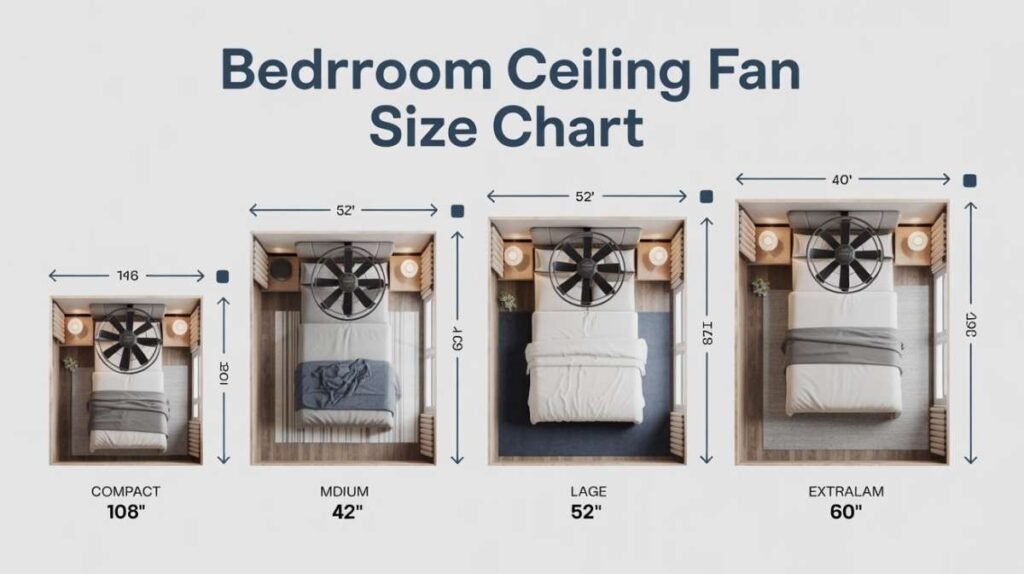
Smaller bedrooms usually benefit from compact fans that circulate air efficiently without dominating the ceiling visually. A fan around 42 inches often provides a balanced combination of airflow and proportion for guest rooms, apartments, and smaller sleeping areas.
Low-profile fans also work especially well inside compact bedrooms because they create a cleaner appearance while keeping enough head clearance for comfort and safety.
Best Ceiling Fan Size for Master Bedrooms
Master bedrooms normally require stronger airflow because the rooms tend to feel larger and more open. In many homes, a 52-inch ceiling fan provides the best balance between comfort, airflow, and appearance.
Some oversized master suites may even benefit from larger fans if ceilings are high enough. However, the fan should still feel visually balanced with the furniture and bed placement rather than appearing oversized for the room.
Low Ceiling Bedroom Fan Tips
Ceiling height matters just as much as blade size. Bedrooms with lower ceilings often feel safer and more comfortable with flush-mount or low-profile ceiling fans.
These designs sit closer to the ceiling and help prevent the fan from hanging too low above the bed or walking areas. Bedrooms with higher ceilings may use downrod-mounted fans to improve airflow positioning.
A fan should never feel too close to someone standing beneath it. Proper installation height helps both comfort and airflow performance.
Common Bedroom Ceiling Fan Mistakes
Many sizing problems happen because people focus only on appearance while ignoring airflow needs.
One common mistake is buying a fan purely because it looks modern online. Stylish designs may still perform poorly if the blade span does not match the room size properly.
Another issue happens when homeowners choose oversized fans for smaller rooms. While larger fans move more air, they can sometimes create uncomfortable airflow directly above sleeping areas.
Ignoring ceiling height is another mistake people frequently make during bedroom upgrades.
Ceiling Fan Airflow and Sleep Comfort
Good airflow affects sleep more than many people realize. Bedrooms often feel stuffy at night because air circulation becomes trapped, especially during warmer seasons.
A properly sized ceiling fan helps move air gently throughout the room instead of blasting strong airflow in one direction. Balanced circulation usually creates a cooler, calmer sleeping environment without excessive noise.
Quiet motor quality also matters. Many modern bedroom fans now focus on low-noise operation because loud humming sounds can become frustrating during sleep.
Do Bigger Ceiling Fans Use More Electricity?
Many people assume larger ceiling fans automatically use much more electricity, but that is not always true. Modern energy-efficient fans often circulate air more effectively while still using reasonable power levels.
In many cases, a correctly sized fan running efficiently may actually feel better than a smaller fan struggling constantly at maximum speed.
Energy-efficient ceiling fans with modern motors also tend to operate more quietly, which makes them especially useful inside bedrooms.
Final Thoughts
Finding the right bedroom ceiling fan size is mostly about balancing airflow, comfort, and room proportions together. Smaller bedrooms usually feel best with compact 42-inch fans, while larger bedrooms and master suites often need 52-inch models for better circulation.
A properly sized ceiling fan can completely change how comfortable a bedroom feels throughout the year. Good airflow, quieter operation, and balanced room design all make a noticeable difference once the correct fan size is installed.
Frequently Asked Questions
Can a 52-inch ceiling fan fit properly in a 12×12 room?
A 52-inch ceiling fan can work well in a 12×12 bedroom, especially in rooms with standard or slightly higher ceilings. Some people still prefer a 48-inch fan because it creates a more proportionate look while providing comfortable airflow.
What ceiling fan size works best for most bedrooms?
Most bedrooms feel comfortable with ceiling fans ranging from 42 to 52 inches depending on room size. Smaller rooms usually need compact fans, while larger bedrooms benefit from wider blade spans for better air circulation.
Which ceiling fan size is recommended for a 12×12 bedroom?
A 48-inch or 52-inch ceiling fan is commonly recommended for a 12×12 bedroom. The best choice usually depends on airflow preference, ceiling height, and how spacious the room feels overall.

Ryan West is an interior design consultant and home styling expert with an eye for modern aesthetics. From transforming cramped kitchens into culinary havens to mastering the art of minimalist home decor, Ryan shares actionable tips to help you create a space that feels like luxury, no matter your budget.